

Recipes
Gut health meal prep: a week built on 30 plants
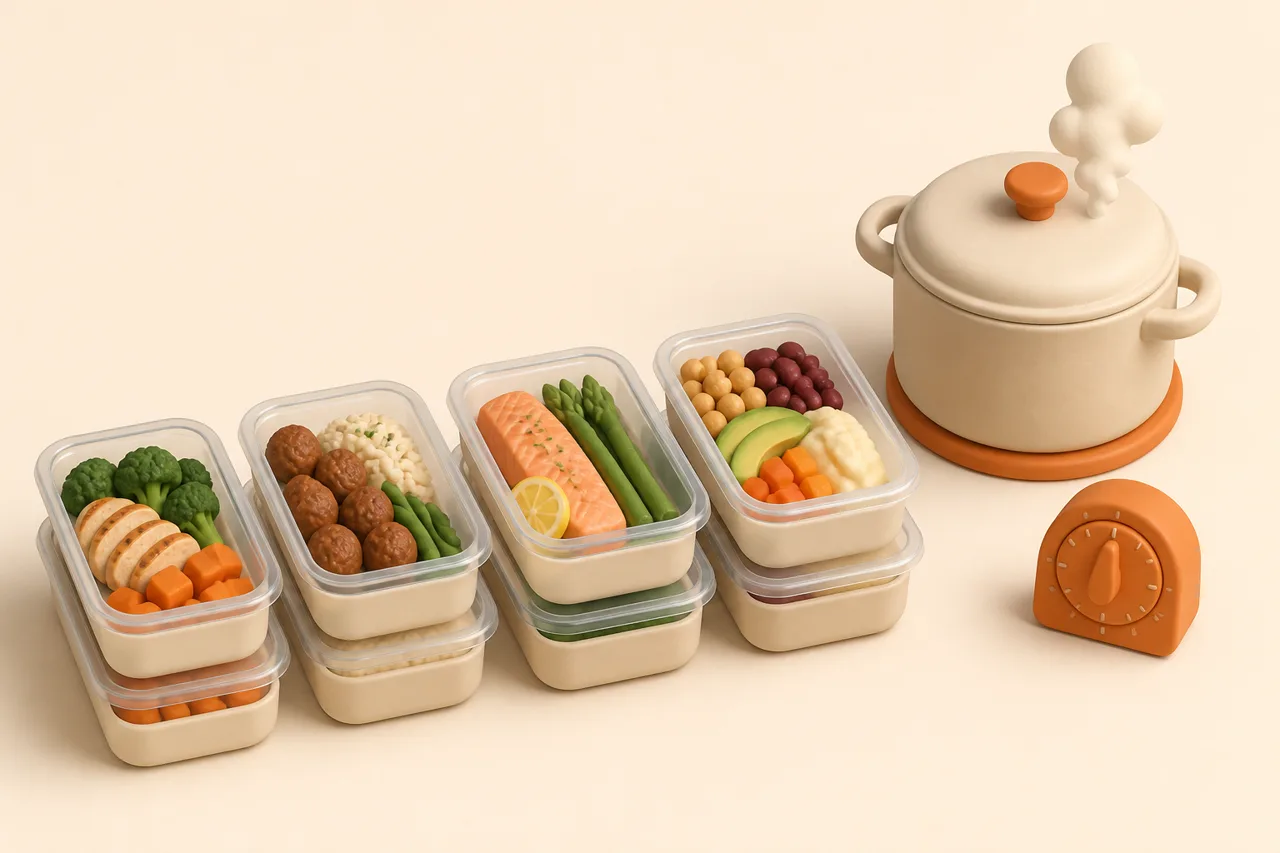
The most repeated piece of gut health advice is variety: around 30 different plants a week. This is what that looks like as a real prep session, rather than a shopping list of supplements.
The most widely repeated practical suggestion for gut health is variety rather than any single food: something close to 30 different plants across a week. It sounds like a lot until you count properly, because herbs, spices, nuts, seeds, wholegrains and pulses all count alongside vegetables and fruit.
This page sets out what that looks like as a single prep session and a week of eating. It is general information rather than guidance for a diagnosed condition, and anyone managing one should work with a professional.
Two levers do most of the work. Variety of plants, and a daily source of fermented food. Everything below is built around making both easy rather than deliberate, because a target that depends on remembering it every day is one that lasts about a fortnight.
What is the 30 plants a week idea?
It is a target for dietary variety rather than quantity, counting each distinct plant food once per week. A mixed-seed jar with 4 seeds in it counts as 4. A curry with 6 spices counts those too.
Counted that way, 30 is very achievable. Most people fall short not because they eat few vegetables but because they eat the same 6 vegetables, one grain and one nut, week after week.
| Category | Counts as | Easy wins | Plants added |
|---|---|---|---|
| Vegetables | Each type | Frozen mixed vegetables | 3 to 4 |
| Pulses | Each type | A 3-bean mix tin | 3 |
| Wholegrains | Each type | Oats, brown rice, wholemeal pasta | 3 |
| Nuts and seeds | Each type | One mixed-seed jar | 4 |
| Herbs and spices | Each type | A spice-heavy curry or tagine | 5 to 8 |
| Fruit | Each type | Frozen berry mix | 3 to 4 |
The Sunday session
About 90 minutes produces the base of a week, and the variety is designed in rather than added later.
- 1Roast 2 trays of mixed vegetables. Six or 7 types across the 2 trays, at 220C for 30 minutes. That is 7 plants in one step.
- 2Cook a pot of mixed pulses. A 3-bean mix or lentils with chickpeas. Three more plants, and the base of 2 dinners.
- 3Make a spice-heavy sauce. A tomato base with cumin, coriander, turmeric, paprika, garlic and ginger. Six plants that also flavour 3 meals.
- 4Mix a seed jar. Pumpkin, sunflower, flax and chia in one container to spoon onto anything. Four plants for the whole week.
- 5Cook a wholegrain. Brown rice, barley or wholemeal couscous, cooled quickly and refrigerated.
- 6Buy 1 fermented item you will finish. Kefir, live yoghurt, sauerkraut or kimchi.
That session alone accounts for roughly 20 plants. Fruit at breakfast, herbs on dinner and a nut snack take it past 30 without any further planning.
Counting a week honestly
It is worth counting once, because most people either overestimate or give up assuming 30 is unreachable. This is a typical week from the session above.
| Source | Plants | Examples |
|---|---|---|
| Roast vegetable trays | 7 | Peppers, courgette, red onion, carrot, aubergine, tomato, squash |
| Pulse pot | 3 | Chickpeas, cannellini, brown lentils |
| Spice sauce | 6 | Cumin, coriander, turmeric, paprika, garlic, ginger |
| Seed jar | 4 | Pumpkin, sunflower, flax, chia |
| Wholegrains | 3 | Oats, brown rice, wholemeal pasta |
| Fruit | 4 | Banana, frozen berry mix, apple, lemon |
| Fresh herbs | 2 | Parsley, coriander |
| Frozen greens | 2 | Spinach, peas |
The spice sauce and the seed jar together account for 10 of those, which is the point worth taking away. Two containers made once cover a third of the target every week without any further thought.
Fermented foods, and how much
Fermented food is the second lever and behaves differently from fibre. A small amount daily is the usual suggestion rather than a large amount occasionally.
- Live yoghurt or kefir. The easiest daily option. A glass of kefir or 150 g of live yoghurt needs no cooking.
- Sauerkraut or kimchi. A tablespoon alongside dinner. Buy unpasteurised, since heat treatment removes the live cultures.
- Miso. A teaspoon in soups, dressings and marinades. Add it off the boil, because high heat is not helpful.
- Kombucha. Useful if you like it, though many commercial versions are high in sugar, so the label is worth checking before it becomes a daily habit.
- Cheese from raw milk and sourdough bread. Both contribute something, though sourdough's cultures do not survive the oven, so it counts for less than the label suggests.
Start with one item and one portion a day. Introducing several fermented foods at once, on top of a jump in fibre, is the usual reason people find this uncomfortable and stop.
What to keep in for variety
Variety is a shopping problem. These items each contribute several plants and none spoils quickly, which is what makes the target sustainable rather than a one-week effort.
- A 3-bean mix tin. Three plants in one tin, and it goes into salads, stews and soups without any preparation.
- Frozen mixed vegetables. Three or 4 plants, no waste, and they cook from frozen in minutes.
- Frozen berry mix. Three or 4 plants, and cheaper than fresh with no risk of spoiling.
- A mixed-seed bag. Four plants that need no cooking and keep for months.
- A spice drawer used deliberately. Six spices in one dinner counts as 6, so a curry or tagine does a lot of work.
- Two fresh herbs a week. Parsley and coriander are the most versatile, and the stalks go into the cooking rather than the bin.
- Wholegrain rotation. Oats, brown rice, barley and wholemeal pasta rather than the same grain daily.
Frozen items are doing most of the work in that list, which is worth saying plainly. Variety usually fails because fresh produce bought for variety goes off before it is used, and frozen removes that failure entirely.
A week that reaches 30
Using the Sunday session, the week assembles itself. Each dinner draws on the same components in different combinations, which is what keeps the shopping list short despite the variety.
- Monday. Roast vegetables with pulses and the spice sauce, over wholegrain.
- Tuesday. Lentil ragu with wholemeal pasta, herbs on top.
- Wednesday. Chickpea curry using the spice sauce, with frozen spinach and yoghurt.
- Thursday. Grain bowl with the last roast vegetables, seeds and a tahini dressing.
- Friday. Soup from whatever remains, blended, with kimchi alongside.
- Breakfasts. Oats with frozen berries, the seed jar and live yoghurt.
The fibre arithmetic behind this is in high fibre recipes, and the batching mechanics in batch cook for the week. Cost is not a barrier here, since the plan is built on pulses and frozen produce, as cheap recipes sets out.
For a plan built around whole foods and olive oil more generally, mediterranean diet dinners covers similar ground. On tracking a varied week, ReciBites vs Samsung Food and ReciBites vs Plan to Eat are the relevant comparisons.
Frequently asked questions
+What is the 30 plants a week target?
A guideline for dietary variety, counting each distinct plant food once a week. Herbs, spices, nuts, seeds, wholegrains and pulses all count alongside vegetables and fruit.
+Do herbs and spices count as plants?
Yes, under this way of counting. A curry with cumin, coriander, turmeric, paprika, garlic and ginger contributes 6 towards the weekly total.
+What are the best fermented foods for gut health?
Live yoghurt, kefir, unpasteurised sauerkraut, kimchi and miso. A small daily portion is the usual suggestion rather than a large amount occasionally.
+How do I hit 30 plants without lots of cooking?
A mixed-seed jar counts as 4, a 3-bean tin as 3, frozen mixed vegetables as 3 or 4, and a spice-heavy sauce as 6. That is 16 from 4 items.
+Should I take a probiotic supplement instead?
Food-based sources also bring fibre and nutrients a capsule does not. Supplements are worth discussing with a professional rather than choosing from a recipe page.
+Why do I feel bloated after increasing fibre?
Usually because the increase was too fast. Add roughly 5 g a week, increase water, and introduce fermented foods one at a time.
+Does cooking destroy the cultures in fermented food?
Heat does reduce them, which is why miso is added off the boil and sauerkraut is served alongside rather than cooked into a dish.
+Is this suitable for IBS?
Not necessarily. Some high-fibre and fermented foods are poorly tolerated in IBS, so anyone with a diagnosed condition should follow professional guidance instead.
- #diets and fitness
- #gut health
- #meal prep
- #high fibre