

Special Diets and Fitness
How to plan a high-protein week without counting anything
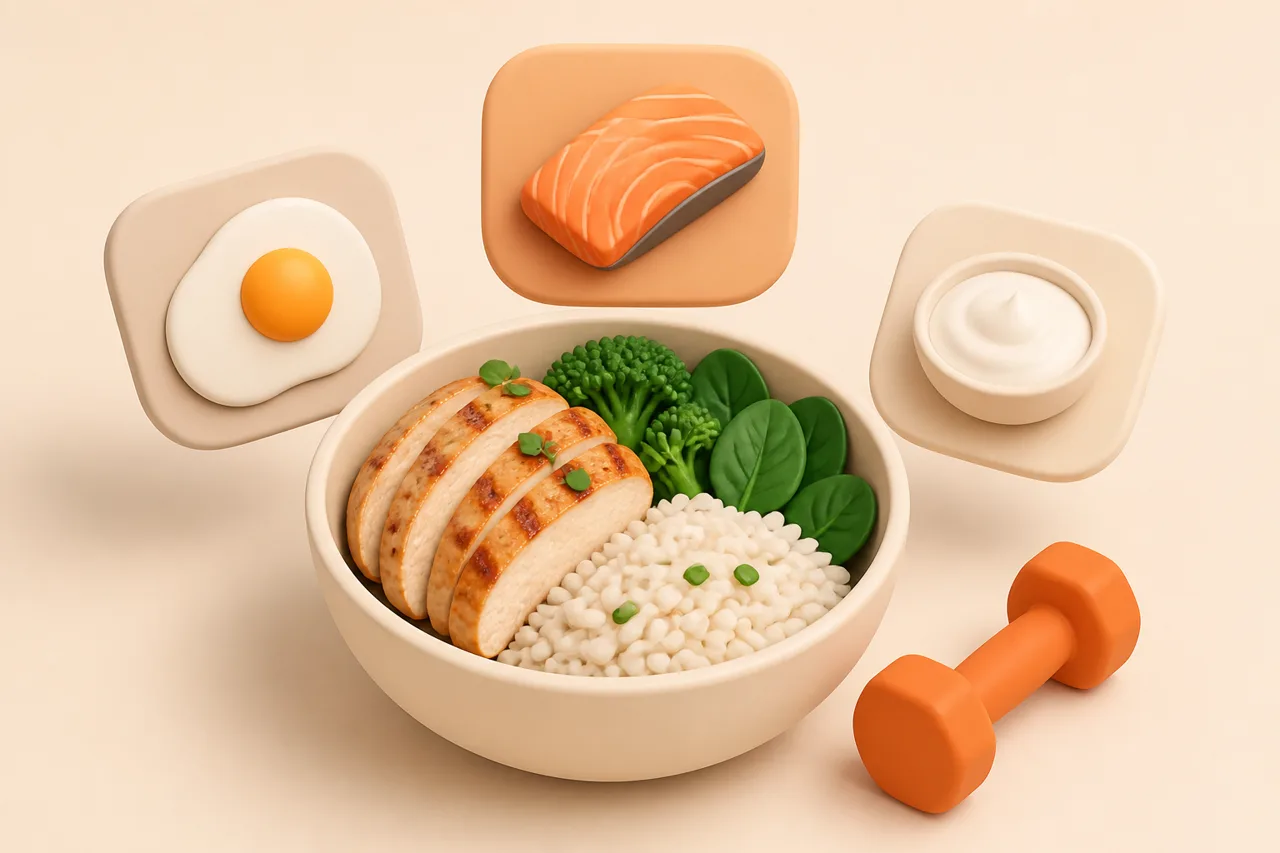
A daily total needs tracking to know where you stand. A per-meal minimum is decided when you plan, which means it needs no tracking at all.
Most protein advice starts with a daily number, which creates an immediate problem: you cannot know whether you are meeting a daily number without tracking, and tracking is the thing most people stop doing after a fortnight.
Setting a minimum per meal instead moves the decision to planning, where it happens once a week. This article covers the numbers, how to classify your existing recipes quickly, and what to do about the meal that usually lets the week down.
What is a protein floor?
A protein floor is a minimum amount you require from every main meal, checked when you choose the recipe rather than measured after eating it.
The advantage is that it is a property of the recipe, not of your day. Once a recipe is known to deliver 35 g per serving, every future occasion you cook it delivers 35 g, and there is nothing to record. Three meals clearing a 30 g floor gets most people where they need to be without a single calculation during the week.
Sensible floors for someone eating 3 meals: about 20 g at breakfast and 30 to 40 g at the 2 main meals. Someone training hard should sit at the upper end, which fuel training without tracking covers.
How much protein is in a normal portion?
This table is the whole system. Read a recipe against it once and you can classify it in about 5 seconds.
| Ingredient | Portion | Protein, approximate |
|---|---|---|
| Chicken breast | 150 g raw | 34 g |
| Salmon fillet | 150 g | 31 g |
| Lean beef mince, 5% | 150 g raw | 31 g |
| Prawns | 150 g | 27 g |
| Firm tofu | 200 g | 28 g |
| Tempeh | 150 g | 28 g |
| Greek yoghurt, 0% | 200 g | 20 g |
| Cottage cheese | 200 g | 24 g |
| Eggs | 3 large | 19 g |
| Cooked lentils | 250 g | 22 g |
| Tinned tuna | 1 tin, drained | 25 g |
| Cheddar | 40 g | 10 g |
Two patterns are worth noticing. Almost any 150 g portion of meat or fish lands near 30 g, which makes those recipes automatic passes. Dairy and eggs sit around 20 g, which makes them supports rather than anchors.
How do you classify your existing recipes?
One session, working through the recipes you actually cook. Most households have 12 to 20 in rotation, so this is 20 minutes rather than a project.
- 1Find the main protein ingredient and its quantity, then divide by the number of servings.
- 2Compare against the table. Above your floor is a pass, within 10 g is a near miss, well below is a side dish.
- 3For near misses, note the fix: an extra egg, a spoon of yoghurt, a tin of beans added to the pot.
- 4Label the recipe so you never repeat the calculation.
- 5For the dishes that fall well short, keep them and pair them rather than deleting them.
The near-miss category is where most of the value sits. A pasta dish at 22 g becomes a 32 g dinner with a tin of tuna or 100 g more chicken, and that is a smaller intervention than finding a new recipe. Track macros in recipes covers the arithmetic in more detail.
Why is breakfast the weak point?
Because the default breakfasts are carbohydrate with a little dairy. Toast, cereal, a pastry and porridge made with water all land between 5 and 12 g, which means the day starts about 15 g short before anything else happens.
Fixing breakfast is the cheapest available change because it is the same meal every day, so 1 decision applies 7 times a week. Nothing else in a plan has that leverage.
- Greek yoghurt with fruit and nuts: around 20 to 25 g.
- Three eggs, any preparation: around 19 g, more with cheese.
- Porridge made with milk plus a spoon of peanut butter: around 18 g.
- Cottage cheese on toast: around 26 g, and quicker than it sounds.
- Overnight oats with milk and yoghurt: around 20 g, prepared the night before.
High-protein breakfast ideas covers these as full recipes. The point for planning is that breakfast should be decided once and repeated, not planned weekly.
Does the timing across the day matter?
Less than the total, and more than nothing. The useful version of this idea is not a rule about windows, it is that concentrating protein into one meal wastes some of it.
A day with 10 g at breakfast, 15 g at lunch and 70 g at dinner reaches a reasonable total and distributes it badly. Spreading the same amount across 3 meals at roughly 30 g each is more useful, and it is easier to plan for, because 3 moderate portions are cheaper and quicker to cook than 1 large one.
- 1Aim for a similar amount at each main meal rather than a large dinner.
- 2Do not skip breakfast and expect to catch up in the evening; the arithmetic works and the appetite usually does not.
- 3If you train, put a meal within a couple of hours either side of the session.
- 4Snacks count. Greek yoghurt or cottage cheese closes a gap without cooking.
None of this requires tracking either, because it is a shape rather than a total. Decide breakfast once, keep 2 snack options in the fridge, and let the 4 planned dinners handle the rest.
What does the weekly routine look like?
About 15 minutes, because the classification work was done once and the breakfast decision does not recur.
- Pick 4 dinners that are already labelled as clearing the floor.
- Put the quickest on the busiest evenings.
- Generate one shopping list, merged and in aisle order.
- Cook 2 components in bulk at the weekend rather than 5 complete meals.
- Leave 2 nights open for leftovers and whatever needs eating.
Bulk cooking a protein is the highest-leverage habit here, since the anchor is the part that takes time and the part that decides the number. High-protein meal prep covers doing it in one session.
Cost is worth a mention, because high-protein eating has a reputation for being expensive and that is mostly a function of which sources you choose. Chicken thigh, eggs, tinned fish, dried lentils, tofu and own-brand Greek yoghurt are all inexpensive per gram of protein. Chicken breast, salmon, prawns and packaged protein products are not. A week anchored on the first group hits the same numbers as one built on the second at a noticeably lower cost, and meal prep on a budget covers the shopping side. Buying the cheaper anchor in bulk and freezing it in portions removes the main reason people reach for the expensive version, which is that it was the thing already in the fridge.
On apps, ReciBites vs MyFitnessPal covers logging against planning and ReciBites vs Lifesum covers prescribed high-protein programmes.
- Protein floor
- A minimum protein amount required from each meal, checked when choosing the recipe rather than measured after eating.
- Anchor and support
- The main protein source in a meal plus a secondary one. Meat, fish, tofu and tempeh anchor; dairy and eggs support.
- Near miss
- A recipe within about 10 g of your floor, fixable with a small addition rather than replacement.
Frequently asked questions
+How do I hit a protein target without tracking?
Set a per-meal minimum instead of a daily total. Around 20 g at breakfast and 30 to 40 g at main meals, checked when you choose the recipe.
+How much protein is in a normal chicken portion?
About 34 g in 150 g of raw chicken breast, and around 28 g in the same weight of boneless thigh. Most 150 g meat or fish portions land near 30 g.
+Why is breakfast the weak meal?
Default breakfasts are mostly carbohydrate and land between 5 and 12 g, so the day starts around 15 g short before anything else happens.
+What is a quick high-protein breakfast?
Greek yoghurt with fruit and nuts at roughly 20 to 25 g, or cottage cheese on toast at around 26 g. Both take under 5 minutes.
+What if a recipe falls short of my floor?
Add rather than reject. A tin of tuna, an extra egg or a spoon of yoghurt lifts a near miss by 10 g without finding a new recipe.
+How long does classifying my recipes take?
About 20 minutes for the 12 to 20 dishes most households actually cook. Label each one so the calculation never repeats.
+Do plant-based meals reach the same numbers?
Yes, with an anchor. Firm tofu at 200 g gives around 28 g and tempeh at 150 g around 28 g, both comparable to a meat portion.
+Is a per-meal floor better than a daily target?
For most people, yes. A daily target requires tracking to know where you stand; a per-meal floor is settled at planning and needs nothing recorded.
- #high protein
- #meal planner
- #nutrition
- #meal prep