

Special Diets and Fitness
High-protein meal prep: how to hit 150 g a day
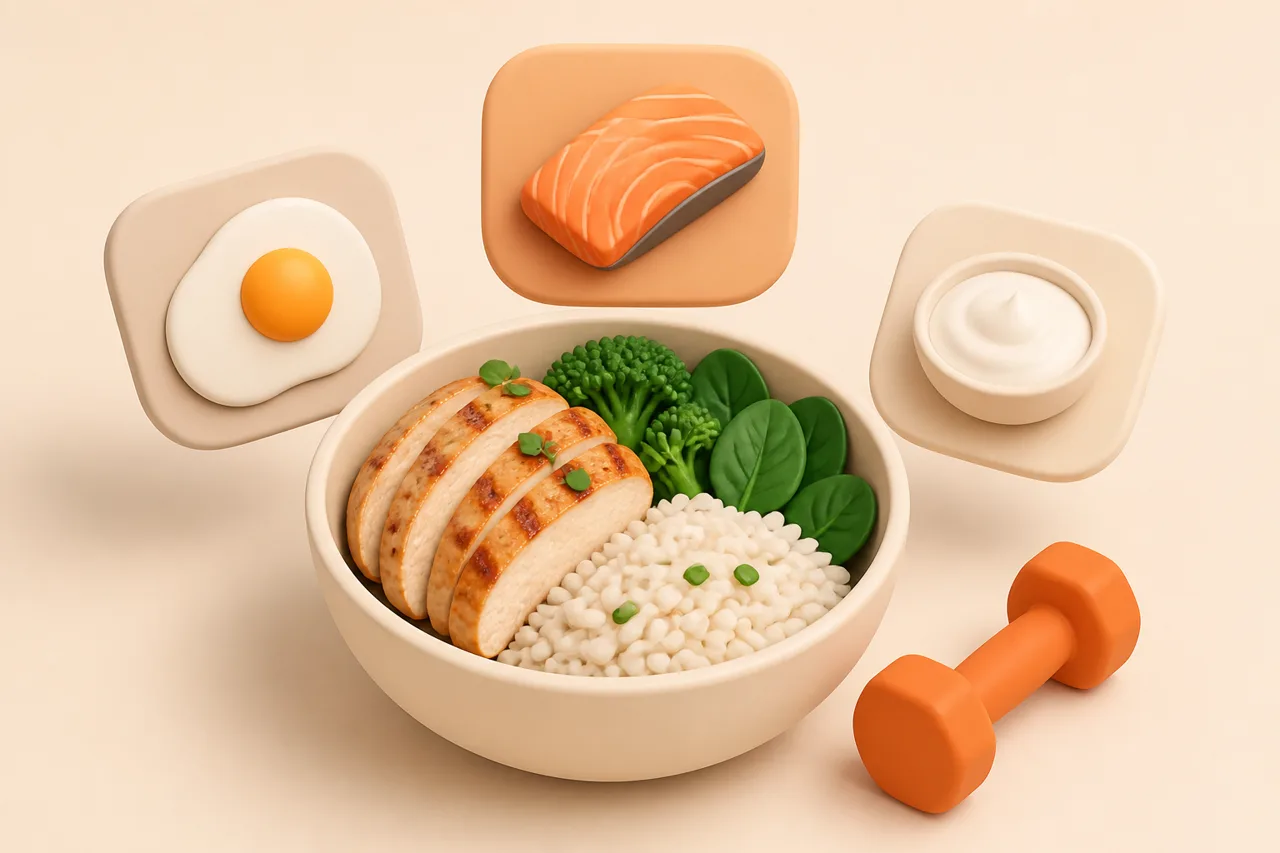
Most people miss a protein target by about 40 g and blame willpower. It is arithmetic: 3 meals at 30 g leaves you 60 g short before the day has started.
Ask someone chasing 150 g of protein a day what they ate and the numbers rarely add up. Porridge is 8 g, a chicken sandwich is 25 g, and a generous dinner is 45 g, which totals 78 g before the snacks nobody counts.
The fix is structural rather than motivational. This guide covers what each common ingredient actually contributes, how to spread the load across the day, and which prepped food still tastes fine on Thursday.
What is high-protein meal prep?
High-protein meal prep is cooking protein sources in bulk ahead of the week so that every meal starts from a known quantity of protein rather than from whatever is in the fridge. The protein is prepped; the rest of the meal is assembled around it.
The distinction matters because full-meal prep is what people abandon. Cooking 5 identical boxes of chicken and rice is boring by Wednesday, while cooking 1.2 kg of chicken thighs and using them 4 different ways is not.
How much protein do you actually need?
Commonly cited ranges for people training regularly sit around 1.6 to 2.2 g per kilogram of body weight per day, which puts a 75 kg person somewhere between 120 g and 165 g. General health guidance is considerably lower, nearer 0.8 g per kilogram.
Pick one number and build the week around it rather than aiming vaguely high. A target of 150 g is 4 eating occasions averaging roughly 37 g, which is a design constraint you can shop against.
How much protein is in common ingredients?
Protein density is what makes a target reachable, because a 30 g portion of protein comes from 100 g of chicken or 750 g of rice. These are the numbers worth memorising.
| Ingredient | Portion | Approximate protein | Notes |
|---|---|---|---|
| Chicken breast | 100 g cooked | About 31 g | Dries out on reheating |
| Chicken thigh | 100 g cooked | About 26 g | Reheats far better, more fat |
| Beef mince, 5 percent | 100 g cooked | About 26 g | Excellent in batch sauces |
| Salmon | 100 g cooked | About 25 g | Best eaten within 2 days |
| Tinned tuna | 1 tin, drained | About 26 g | No cooking, cheap top-up |
| Greek yoghurt, 0 percent | 170 g pot | About 17 g | Works savoury as a sauce base |
| Cottage cheese | 100 g | About 11 g | Blends into a smooth sauce |
| Eggs | 2 large | About 13 g | Boiled batch keeps 5 days |
| Firm tofu | 100 g | About 16 g | Press, then roast hot |
| Tempeh | 100 g | About 19 g | Holds texture through reheating |
| Cooked lentils | 150 g | About 13 g | Adds fibre alongside protein |
| Whey or soy powder | 1 scoop, 30 g | About 24 g | The cheapest gap-filler by weight |
Should you spread protein across meals or take one big hit?
Spread it. Four occasions at 35 to 40 g is easier to eat, easier to shop for and easier to hit consistently than two meals carrying 75 g each.
| Pattern | Protein per occasion | Why it fails or works |
|---|---|---|
| Two large meals | 75 g each | Portions get uncomfortably big and one missed meal costs half the day |
| Three meals | 50 g each | Workable, but breakfast rarely delivers 50 g without planning |
| Three meals plus one top-up | About 37 g each | The most forgiving pattern, and the top-up is the recovery lever |
| Grazing all day | 15 to 20 g each | Hard to track and usually lands 30 g short |
Breakfast is where most days are lost. Moving from toast to eggs and yoghurt is a swing of about 25 g, and it costs no extra cooking time. If you are logging any of this, the weighing workflow in tracking macros in recipes keeps the numbers honest.
How do you add 30 g without adding a whole meal?
Use top-ups: dense additions bolted onto food you were already eating. Each of these adds 15 to 25 g without becoming a separate cooking job.
- Swap the yoghurt. Standard yoghurt to 0 percent Greek adds roughly 8 g per pot for no effort.
- Stir cottage cheese into a sauce. Blended, it adds about 11 g per 100 g and reads as creaminess.
- Add a tin of tuna, lentils or chickpeas to a salad or pasta, worth 13 to 26 g.
- Keep boiled eggs in the fridge. Two eggs is 13 g and requires no decision at 4pm.
- Use skyr or fromage frais in a dressing instead of mayonnaise, adding protein while cutting fat.
- Stir a scoop of unflavoured powder into porridge, worth about 24 g for 30 g of powder.
- Finish a bowl with edamame or roasted chickpeas, worth 8 to 12 g and useful texture.
Keep 3 of these permanently stocked and a short day becomes a fixable day. Cheaper sources do most of the work here, and the economics are worked through in meal prep on a budget.
Which prepped protein survives reheating?
Fat and connective tissue protect texture, and lean muscle does not. That single rule predicts almost everything that comes out of a microwave badly on day 3.
Reheat behaviour
Pros
- Chicken thighs, braised beef and pork shoulder stay tender because rendered fat keeps them moist
- Mince in a sauce reheats indefinitely, since the sauce carries the moisture
- Tofu and tempeh hold texture, and tofu often improves after a day in marinade
- Lentils, beans and boiled eggs are effectively unchanged after 4 days
Cons
- Chicken breast turns stringy by day 2 unless it is sliced into sauce
- White fish and salmon go dry and smell strong after 48 hours
- Prawns turn rubbery on the second heating
- Scrambled egg weeps water and separates
Two habits fix most of it. Undercook prepped protein by about 10 percent knowing it finishes on reheating, and store it in its sauce rather than beside it.
How do you prep a week without eating the same meal 5 times?
Prep components, not meals. Cook 2 proteins and 2 carbohydrates in bulk, then change only the sauce and the fresh element, and 4 cooking jobs cover 12 meals.
- 1Pick 2 proteins with different reheat behaviour, for example 1.2 kg of chicken thighs and a tray of roasted tofu.
- 2Cook 2 bases, such as rice and roasted potatoes, and keep them unseasoned so they take any direction.
- 3Make 3 sauces in jars: a yoghurt and herb one, a chilli and soy one, a tahini and lemon one.
- 4Prep one crunchy element each time you assemble, since freshness is what stops leftovers tasting like leftovers.
- 5Assemble at the point of eating, not on Sunday, so nothing sits in dressing for 4 days.
This is where a recipe library earns its keep: 3 sauces against 2 proteins is 6 combinations, and you only need to remember them once. The bulk-cooking mechanics are covered in batch cooking for the week.
How does an app help with high-protein prep?
An app removes the planning and shopping overhead, which is the part that actually stops people prepping. ReciBites saves high-protein recipes from TikTok, Instagram, YouTube or any URL, generates a weekly plan, and turns that plan into a grocery list with duplicate ingredients merged and everything grouped by aisle.
It also scales servings, which matters when a recipe written for 2 needs to feed one person for 4 days. Building the shopping side properly is covered in grocery lists from recipes.
Be clear about the limit: there is no nutrition database in ReciBites, so it will not total your protein for you. Keep the per-portion figures in the recipe notes and let a tracking app own the daily log. If automatic nutrition numbers are a hard requirement, weigh that honestly against ReciBites vs Mealime and ReciBites vs ReciMe.
For the wider training week, fuelling without tracking covers the 4 decisions that hold a week together without a food diary.
- Protein anchor
- The single ingredient in a meal supplying most of its protein, usually 30 to 40 g in a high-protein plan.
- Top-up
- A dense addition worth 15 to 25 g of protein that attaches to food you were already eating rather than becoming a meal.
- Component prep
- Batch-cooking proteins, bases and sauces separately, then assembling meals from them, instead of cooking identical finished boxes.
- Leucine
- An amino acid used as a rough marker of a protein source's quality. Animal sources and soy are higher in it than most grains.
Frequently asked questions
+How do I get 150 g of protein a day?
Split it across 4 occasions at roughly 37 g each. Anchor every meal with a dense source, then use a top-up such as Greek yoghurt or tuna to close gaps.
+How much protein should I eat per day?
Commonly cited ranges are about 1.6 to 2.2 g per kilogram of body weight for people training regularly, and lower for general health. Check with a dietitian for a clinical target.
+What is the best protein for meal prep?
Chicken thighs, beef mince in sauce, tofu and tempeh. All hold texture after several days, unlike chicken breast, prawns and white fish.
+How do I add protein to a meal without cooking more?
Stir in cottage cheese, add a tin of tuna or lentils, swap to 0 percent Greek yoghurt, or keep boiled eggs ready. Each adds 10 to 26 g.
+How long does prepped chicken last in the fridge?
Generally 3 to 4 days in a sealed container, stored in its sauce to keep it moist. Freeze anything you will not eat in that window.
+Can I hit a protein target on a plant-based diet?
Yes, using tempeh at about 19 g per 100 g, tofu at 16 g, lentils and soy powder. Plant sources are less dense, so portions run larger.
+Does ReciBites count protein for me?
No. ReciBites has no nutrition database, so it saves, plans and shops for recipes while a separate tracking app handles the protein totals.
+How do I stop meal prep tasting boring by Wednesday?
Prep components rather than finished meals. Two proteins, two bases and three sauces produce a dozen combinations from four cooking jobs.
- #high protein
- #meal prep
- #batch cooking
- #protein targets