

Special Diets and Fitness
How to find and organize halal recipes in one place

The hard part of a halal recipe library is not the obvious ingredients. It is gelatin in a panna cotta, rennet in the parmesan and alcohol in the vanilla.
You already know the headline rules. The recipes that catch people out are the ones that look fine: a panna cotta set with pork gelatin, a pasta finished with animal-rennet parmesan, a sponge scented with vanilla extract that is roughly a third alcohol by volume.
This guide covers the ingredients worth checking, the swaps that keep a dish working, and a tagging system that stops you re-vetting the same recipe every month.
What is a halal recipe collection?
A halal recipe collection is a personal recipe library in which every saved recipe carries a status: halal as written, halal after a substitution, or not adaptable. The status is the useful part, because an unlabelled recipe gets re-checked from scratch every time you open it.
Almost nobody starts with a clean library. Recipes arrive from TikTok, food blogs and family cards long before you decide whether you will cook them, so the goal is triage rather than deletion. The same principles that make a general library searchable apply here, covered in organising digital recipes.
Which ingredients make a mainstream recipe non-halal?
Beyond pork and alcoholic drinks, the recurring culprits are animal-derived processing aids and alcohol used as a solvent or a cooking liquid. None of them are announced in a recipe title, and several appear under names that sound synthetic.
| Ingredient | Why it needs checking | What to look for |
|---|---|---|
| Gelatin | Commonly pork-derived in Western desserts, marshmallows and some yoghurts | Beef or fish gelatin, or agar agar |
| Hard cheese | Traditional parmesan and pecorino use calf rennet | Microbial rennet or vegetarian rennet on the label |
| Vanilla extract | Standard extract is an alcohol solution, often around 35 percent | Vanilla powder, seeds, or an alcohol-free paste |
| Cooking wine, mirin, sake | Alcohol added as a braising or deglazing liquid | Stock, juice, or a labelled alcohol-free mirin |
| Mono- and diglycerides | Emulsifiers that can come from animal or plant fat | A plant-source statement or a certification mark |
| L-cysteine | A dough conditioner in commercial bread and buns | Synthetic or certified sources only |
| Lard and shortening | Animal fat in pastry, refried beans and some tortillas | Butter, ghee or vegetable shortening |
| Enzymes and lipase | Unnamed enzymes in cheese and baked goods may be animal-derived | A named plant or microbial source |
How do you read a halal certification label?
Treat certification as a shortcut, not as the answer. A certifier's mark tells you an organisation audited that product, so the first question is which organisation, and whether you recognise it.
- Look for a named certifier, not the bare word halal printed by a manufacturer on its own packaging.
- Read the ingredient list anyway. Certification covers the product as audited, and recipes get reformulated.
- Imported products need a second look. A mark accepted in one country may not be recognised by your local body.
- `Suitable for vegetarians` solves two problems, gelatin and rennet, and says nothing about alcohol.
- Meat is a separate question from ingredients, and depends on slaughter method rather than the label alone.
How do you vet a saved recipe in 60 seconds?
Vet a recipe in one pass, at the moment you save it, using a fixed order. Working the same way every time turns a judgement call into a habit, and it means you never open a recipe on a Tuesday evening and discover it needs research.
- 1Scan for meat and fat
Check the protein and any cooking fat first. These decide whether the recipe is worth continuing with, and lard hides inside pastry, refried beans and some tortillas.
- 2Scan for liquids
Wine, mirin, sake, beer and stock made with them usually appear in the method rather than the ingredient list. Read the deglazing step, not only the list at the top.
- 3Scan for setting and dairy agents
Gelatin, hard cheese and anything described as an enzyme or emulsifier. This is where most desserts and pasta dishes fail quietly.
- 4Scan the flavourings
Extracts, essences and finishing sauces. Vanilla extract and Worcestershire-style sauces are the two that catch people most often.
- 5Tag and note
Write the outcome into the recipe before you close it: the status tag, plus the specific swap if one is needed. Future you will not remember the reasoning.
Recipes imported from a food blog need one extra check, because bloggers frequently mention a brand in the body text that never reaches the ingredient list. Read the intro paragraphs once before you archive the source.
How do you substitute non-halal ingredients?
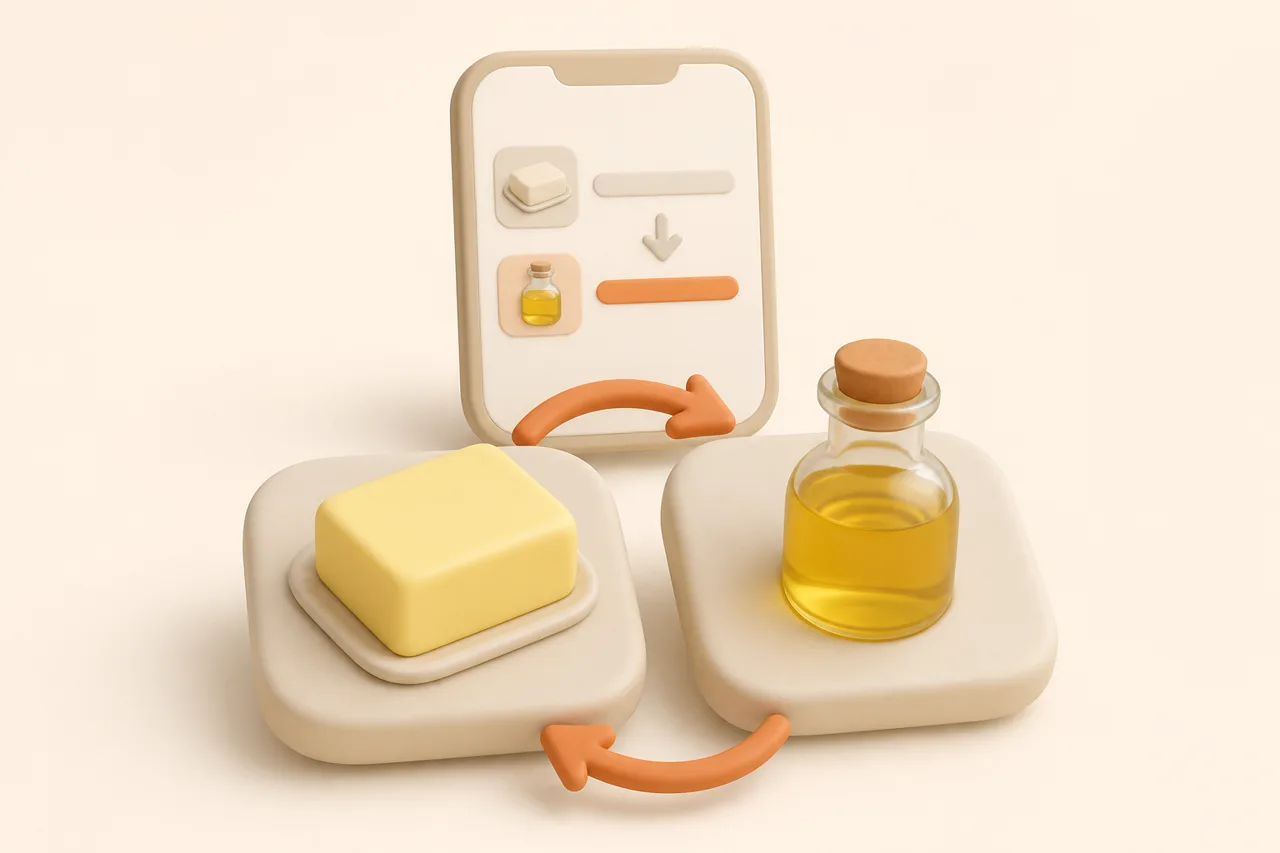
Substitute for the function, not the name. Wine in a braise contributes acid and depth, so the replacement needs both; gelatin contributes a specific set strength, so the replacement needs to match the texture rather than the volume.
| Original | Swap | What changes |
|---|---|---|
| Red wine in a braise | Equal volume beef stock plus a spoon of pomegranate molasses | Slightly sweeter, so reduce a few minutes longer |
| White wine in a pan sauce | Chicken stock plus a squeeze of lemon at the end | Sharper and cleaner, less body |
| Mirin | 1 tbsp rice vinegar plus 1 tsp sugar per tablespoon | Close match in glazes and teriyaki |
| Bacon or pancetta | Beef bacon, smoked turkey, or smoked paprika plus extra salt | Less rendered fat, so add a little oil |
| Powdered gelatin | Halal beef gelatin 1:1, or agar at roughly half the weight | Agar needs a boil and sets firmer and less wobbly |
| Parmesan | A hard cheese labelled vegetarian, or aged gouda | Milder and saltier, adjust seasoning at the end |
The ReciBites AI cooking assistant will rewrite a saved recipe for halal constraints, replacing the ingredient line and adjusting the method step that used it. Its suggestions are a starting point rather than a certification, and the substituted product still needs checking on the shelf. There is more on the general technique in substituting ingredients.
How should you tag a mixed recipe library?
Use 3 states and one reason field. Anything more granular and you stop maintaining it; anything less and you cannot tell a checked recipe from an unchecked one.
- 1`halal-ok` — checked, nothing needs changing. Cook it without thinking.
- 2`halal-swap` — one or two ingredients need replacing, and the note says which. Example:
swap: vanilla extract. - 3`check` — an ingredient you have not verified yet, usually a branded product or an unnamed enzyme.
- 4Untagged — not vetted. Treat untagged as unknown rather than as safe.
Tag at save time, not at cook time. Adding one tag while a recipe is fresh takes 5 seconds; reconstructing why you saved a recipe 3 months ago takes far longer, and this is exactly how libraries silently rot, as covered in why saved recipes get lost.
How do you avoid cross-contamination at home?
Cross-contamination is a kitchen workflow problem rather than a recipe problem, and it concentrates in shared equipment. In a mixed household the risk points are predictable, which makes them easy to design around.
- Oil and frying. Oil that has cooked non-halal meat carries it forward. Keep a separate pan or change the oil.
- Boards and knives. Colour-code them, or wash between uses rather than wiping.
- Basting brushes and tongs move marinade between dishes more than people expect.
- Shared oven trays. Dripping fat travels downwards, so put the halal tray on the upper shelf.
- Baking. Alcohol-based extracts and gelatin sneak in through shop-bought decorations and fillings.
If your household is cooking two or three ways at once, plan the overlap deliberately instead of cooking twice. The approach is set out in cooking for multiple diets.
Where does a recipe app help, and where does it not?
An app is good at capture, adaptation and repetition, and useless at verification. Knowing which side of that line you are on keeps expectations honest.
What software can and cannot do here
Pros
- Saves recipes from TikTok, Instagram, YouTube, Pinterest or any URL into one searchable library
- Reads a family recipe card or a cookbook page via OCR so it can be tagged like everything else
- Suggests halal substitutions and rewrites the affected method steps
- Builds the week's grocery list from your plan, grouped by aisle
Cons
- Cannot confirm that a specific branded product is certified
- Cannot see slaughter method or supply chain for meat
- Cannot know which certifier your household accepts
- Cannot detect cross-contamination in a restaurant kitchen
If you are comparing tools, judge them on dietary tagging and adaptation rather than recipe count. Two useful reference points are ReciBites vs Mealime and ReciBites vs Paprika, which sit at opposite ends of the automated-versus-manual scale. Households juggling allergies as well should read adapting recipes for allergies.
Once the collection exists, planning a halal week covers turning it into 4 dinners and one shop without re-checking every recipe.
- Zabiha
- Meat from an animal slaughtered according to Islamic requirements. A separate question from whether the other ingredients are halal.
- Mashbooh
- Doubtful. An ingredient whose source cannot be determined from the label, such as an unnamed enzyme or generic mono- and diglycerides.
- Microbial rennet
- A coagulant produced by fermentation rather than from a calf stomach, used in cheeses labelled vegetarian.
- Agar agar
- A seaweed-derived setting agent used in place of gelatin. It must be boiled to activate and sets firmer.
Frequently asked questions
+How do I find halal recipes without searching every ingredient?
Save recipes into one library and tag each as halal, needs a swap, or unchecked at save time. Search the tag afterwards instead of re-reading ingredient lists.
+Is vanilla extract halal?
Standard vanilla extract is an alcohol solution, so opinions differ. Vanilla powder, vanilla seeds and alcohol-free vanilla paste avoid the question entirely and behave the same in baking.
+Is gelatin always pork?
No. Gelatin can be bovine, fish or porcine, and the label does not always say. Beef gelatin and agar agar are reliable alternatives in desserts.
+Can I use an app to make a recipe halal?
An AI assistant such as the one in ReciBites can suggest substitutions and rewrite the affected steps. Verify the replacement product's label yourself, because software cannot confirm certification.
+What can I use instead of wine in cooking?
Stock plus an acid works for most dishes. Use beef stock with pomegranate molasses for red wine, and chicken stock with lemon juice for white.
+Is parmesan halal?
Traditional parmesan uses calf rennet, so check for a microbial or vegetarian rennet label. Aged gouda and vegetarian hard cheeses work well as replacements.
+How do I organise halal and non-halal recipes in one app?
Use one library with 3 tags: halal as written, halal after a swap, and unchecked. Treat anything untagged as unverified rather than as safe.
+Does halal certification cover every ingredient in a recipe?
It covers the audited product only. Recipes combine several products, so each one needs its own check, and formulations change between production runs.
- #halal
- #recipe organizing
- #dietary tagging
- #substitutions