

Meal Planning and Groceries
How to meal plan for a family of 4 or more
Feeding 4 people is not the same recipe multiplied by 2. Plan in portion units, cook one meal with modular components, and stop running a short-order kitchen.
A family plan breaks for reasons a solo plan never hits: 5 appetites, 2 people who will not eat mushrooms, a Tuesday that ends at 18:45, and a recipe written for 4 that feeds 3 of you.
The answer is not more recipes. It is fewer meals built from parts, sized with honest maths and scheduled around the nights you actually have.
What is family meal planning?
Family meal planning is deciding a week of shared meals sized to your household's real appetite, structured so different eaters can be satisfied from one pan. The defining constraint is that you cook once and serve several people who want different things.
Every technique below follows from that constraint. If you find yourself cooking two dinners, the plan has failed even when everybody ate.
How much food does a family of 4 actually need?
Count portion units, not people. Scaling a 4-serving recipe by headcount is why some weeks leave a pan of leftovers and others leave a hungry teenager staring into the fridge at 21:00.
| Eater | Planning units | What that means at the pan |
|---|---|---|
| Toddler | 0.25 to 0.5 | A spoonful of everything, and most of it comes back |
| Primary-age child | 0.5 to 0.75 | Half portions, but they finish the carbohydrate |
| Older child | 0.75 to 1 | A full adult plate on active days |
| Teenager | 1.5 to 2 | Plan for seconds, or plan to lose the leftovers |
| Adult | 1 | The baseline the recipe was written for |
Add your units up and cook to that total. A household of 2 adults, a teenager and a 6-year-old is roughly 4 units, not 4 people, and the difference shows up as either waste or a second dinner.
Once you know your number, scale recipes to it rather than to the nearest round figure. The maths, including which ingredients do not scale linearly, is in scale recipe servings.
Calibrate over 2 weeks rather than trusting the table. Note the meals where food came back and the meals where someone raided the cupboard afterwards, then adjust your total by half a unit. Most households land on a stable number quickly and stop thinking about it.
What is a modular meal?
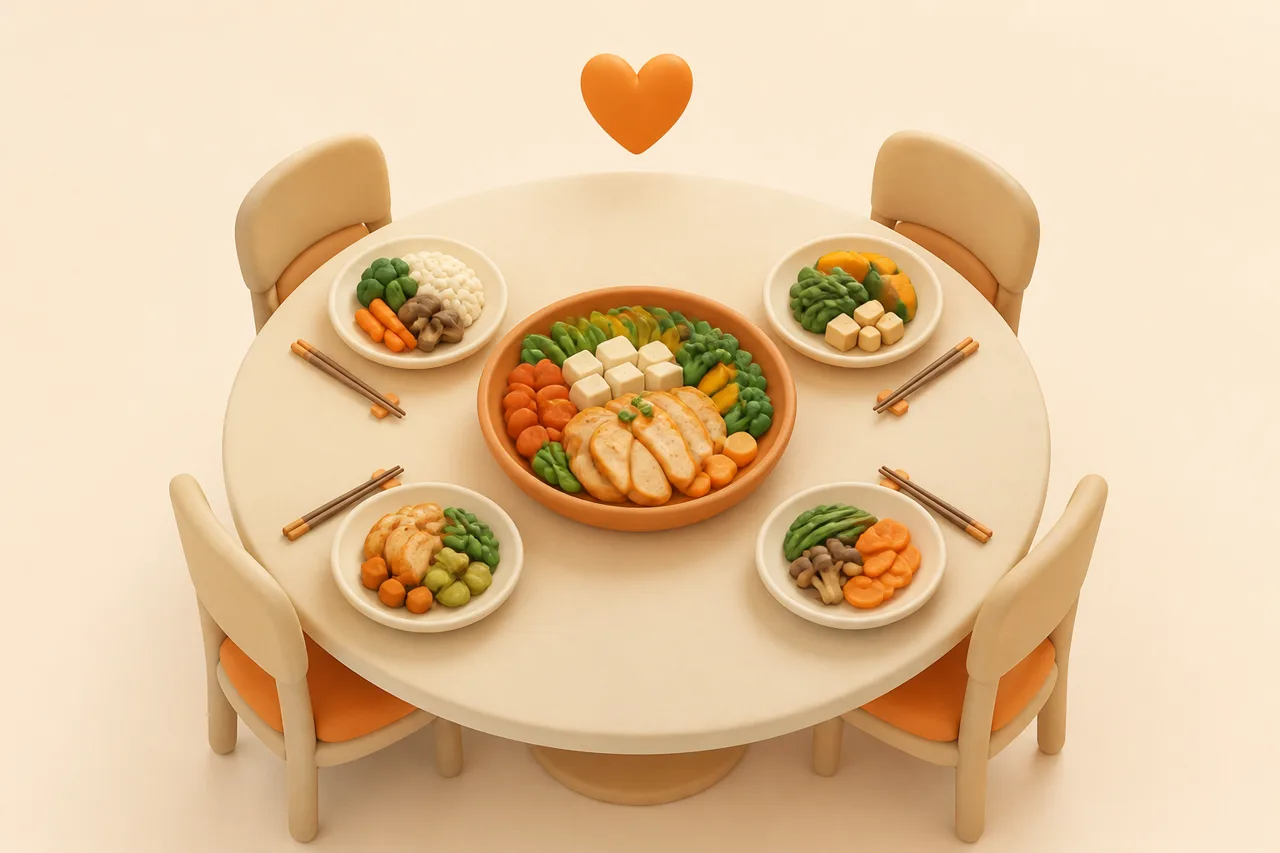
A modular meal is one cooked base plus separate components that each person adds themselves. You cook once, and the variation happens on the plate rather than at the hob.
Why modular beats separate meals
Separate meals multiply everything: shopping, pans, timing and washing up. Modular meals hold the base constant and give each eater one decision, which is usually all a fussy eater actually wants.
- Taco night. One spiced filling, then cheese, lettuce, salsa, yoghurt and lime laid out separately.
- Rice bowls. Rice and a protein, with pickles, herbs, chilli and fried egg as options.
- Jacket potatoes. Baked potatoes with beans, tuna, cheese and slaw in bowls in the middle.
- Pasta night. Plain pasta, one sauce, and grated cheese, chilli flakes and greens on the side.
- Traybake plus sides. Roast protein and vegetables, served with bread, salad or couscous.
The one-swap rule
Allow one substitution per person per meal, chosen from things already on the table. It gives children real control without turning you into a short-order cook, and it removes the argument before it starts.
If your household includes a genuine dietary requirement rather than a preference, the base needs designing around it. That case is covered in cook for multiple diets.
How do you plan around school nights?
Match the meal to the evening you will actually have, not the evening you would like. Sort your week into 3 kinds of night and assign recipes to the right kind.
- 1Mark the tight nights
Any evening with clubs, late finishes or homework pressure gets a 25-minute meal with 5 or fewer ingredients. Keep 4 of these on permanent rotation so nobody has to think.
- 2Mark the one cooking night
Pick the calmest evening for the batch: the chilli, the traybake, the pot of ragu. This is the meal that also feeds a tight night later in the week.
- 3Mark the assembly night
One night where nothing is cooked from scratch, only assembled. Modular meals live here, and so does the pan you cooked on the calm evening.
- 4Leave 2 nights open
Something will change. Two unassigned nights turn a schedule change into a shrug rather than a takeaway you resent.
Place perishable meals on the first 3 days after your shop and freezer-backed meals at the end of the week. A family fridge empties unevenly, and fish planned for Friday is a bet you lose often.
This is the same timeboxing idea as the solo version, just with a harder schedule attached. The base routine is in the 20-minute weekly routine.
How do you get the family to buy in?
Give everyone one pick. A dinner someone chose gets eaten, and the fastest way to end negotiation at the table is to move the negotiation to Saturday morning.
- 1One pick each, in rotation. Four people means 4 chosen dinners and one you decide, which fills a 5-dinner week.
- 2Picks come from a shortlist. A shared library of meals the household already likes prevents Friday becoming ice cream night.
- 3Whoever picks helps. Ten minutes of chopping or table-setting attaches ownership to the meal.
- 4Write the picks where everyone sees them. A visible plan stops the 17:30 question about what is for dinner.
What is a leftovers strategy?
Decide what leftovers become before you cook, and cook a deliberate surplus of the things that transform well. Unplanned leftovers get eaten roughly half the time; planned ones get eaten because they are already on the calendar.
- Roast chicken becomes wraps on day 2 and a rice soup on day 3.
- Bolognese or chilli becomes a baked pasta, or the filling for jacket potatoes.
- Roast vegetables become a frittata, a grain salad or a blended soup.
- Plain rice becomes fried rice the next day, cooled fast and reheated once until piping hot.
Label the container with the meal it is destined for, not just the date. "Wednesday wraps" gets eaten; an unlabelled tub of beige becomes a science project.
Cook the surplus deliberately, too. Adding half a unit to the batch on your calm cooking night costs a few minutes and one larger pan, and it buys back an entire tight night later in the week.
How do you run a family plan in ReciBites?
ReciBites keeps the household's recipes in one place and turns the chosen week into a single shop. The parts that scale badly by hand, scaling and list building, are the parts it takes over.
- One library. Save recipes from TikTok, Instagram, YouTube, Facebook, Pinterest or any website URL, and photograph handwritten cards so family recipes join the same collection.
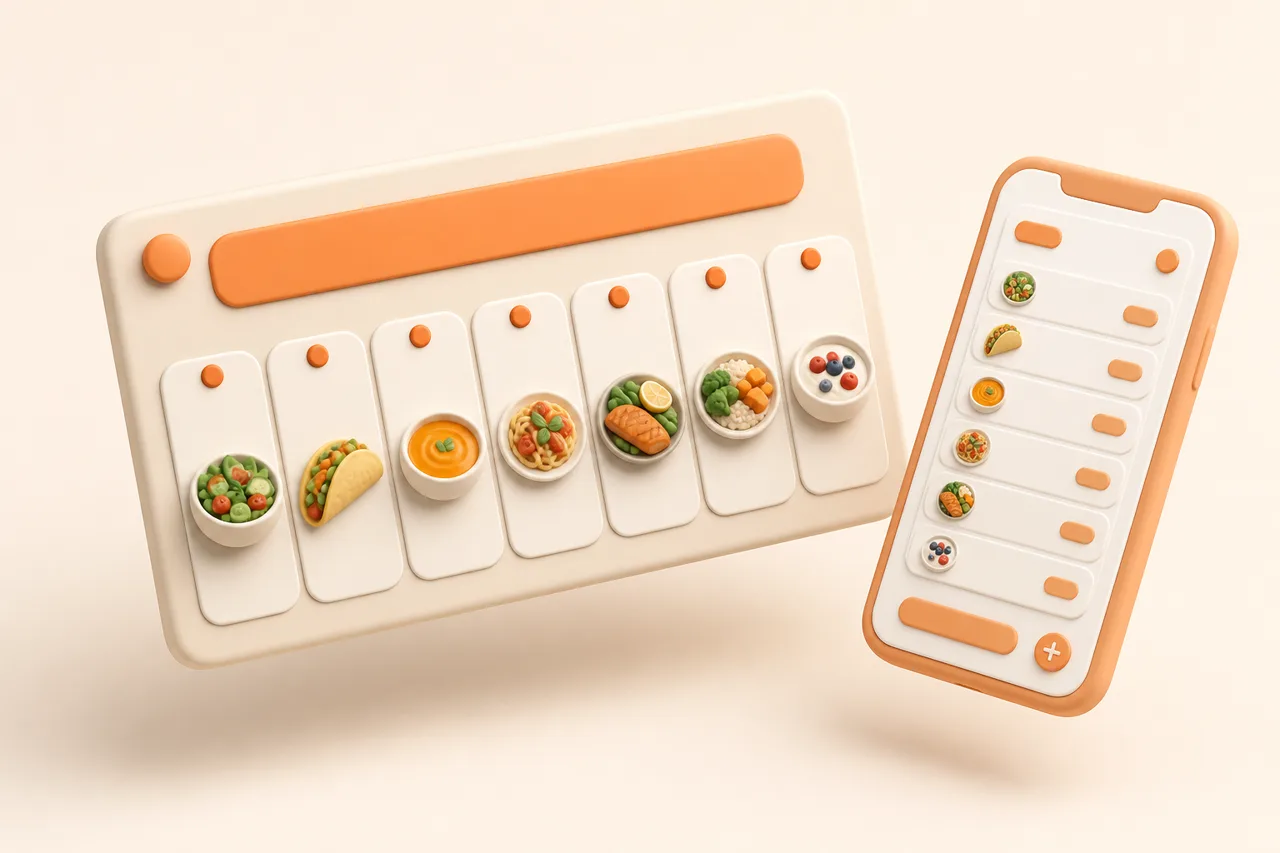
- Automatic weekly plans. Generate a plan, then swap in the dinners each person picked.
- Scaled servings. Set the servings to your portion-unit total before the list is built.
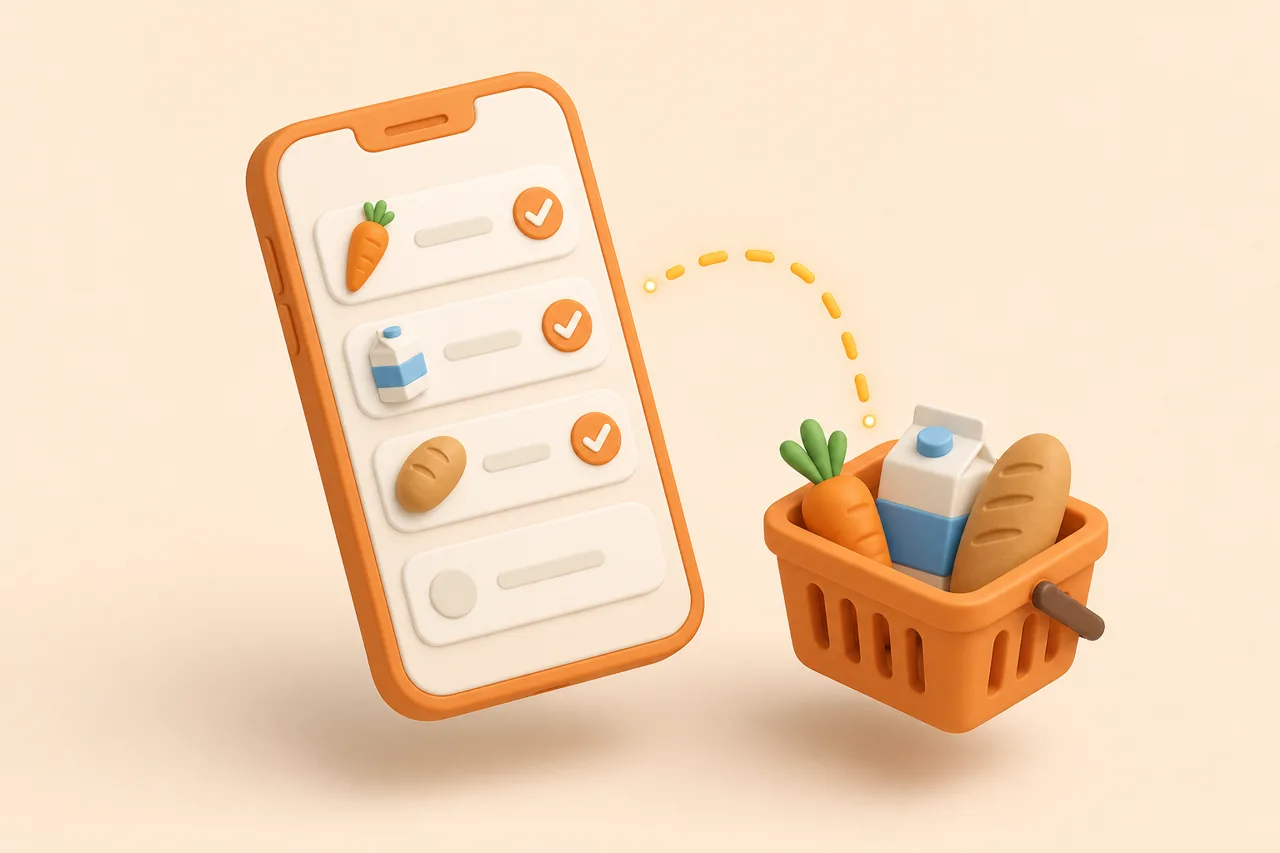
- One merged grocery list. Duplicates collapse into single lines and everything is grouped by aisle.
- Dietary adaptation. The AI cooking assistant reworks a recipe for a gluten-free, halal, vegan or allergy requirement without you planning a separate meal.
Household tooling differs mainly in how well it handles more than one cook. Shared lists are the axis in ReciBites and AnyList, a large personal archive in ReciBites and Paprika, and prewritten menus in ReciBites and Mealime.
What breaks family meal plans?
Family plans fail structurally, not through lack of effort. Each failure below has a direct fix in the sections above.
Holds up versus falls apart
Pros
- Portion units totalled before recipes are scaled
- One base with components everyone assembles themselves
- Fixed 25-minute anchors for the 3 tightest nights
- Leftovers labelled with the meal they are booked for
Cons
- Cooking a second dinner for the child who refused the first
- Scaling by headcount and finding a teenager still hungry
- Booking the ambitious recipe for the night with 2 clubs
- One adult holding the entire plan in their head
Refusal at the table is the hardest of these and it responds better to structure than to persuasion. There is a dedicated approach in meal plan for picky eaters.
Frequently asked questions
+How do I meal plan for a family of 4?
Total your portion units rather than counting people, plan 5 dinners for 7 nights, and build most of them as one base with components each person adds themselves.
+How do I feed a family with different tastes?
Cook modular meals: one base plus separate toppings and sides. Allow one swap per person from what is already on the table, so nobody gets a second dinner cooked for them.
+How much food do I need for a family of 5?
Add up planning units instead of headcount. Two adults, a teenager and 2 younger children is roughly 4.5 units, which is more food than a standard 4-serving recipe.
+How do I plan meals around after-school activities?
Sort the week into tight nights, one cooking night and one assembly night. Tight nights get a fixed 25-minute meal with 5 or fewer ingredients.
+How do I get my kids to eat the meal plan?
Give each person one dinner pick per week from a shared shortlist, and have whoever picked help cook it. Ownership beats persuasion at the table.
+Can an app plan meals for a whole family?
Yes. ReciBites generates weekly plans from your saved recipes, scales servings to your household and builds one grocery list with duplicates merged and lines grouped by aisle.
+What should I do with family leftovers?
Decide their next meal before you cook, then label the container with that meal rather than the date. Roast chicken becomes wraps, then soup.
+How do 2 parents share one meal plan?
Keep the plan and the grocery list in one shared place both phones can see. Duplicate purchases and missed items come from 2 people holding separate mental lists.
- #family meals
- #meal planning
- #portions
- #leftovers