


Roundups and Guides
Best pantry and fridge recipe apps for using up what you have
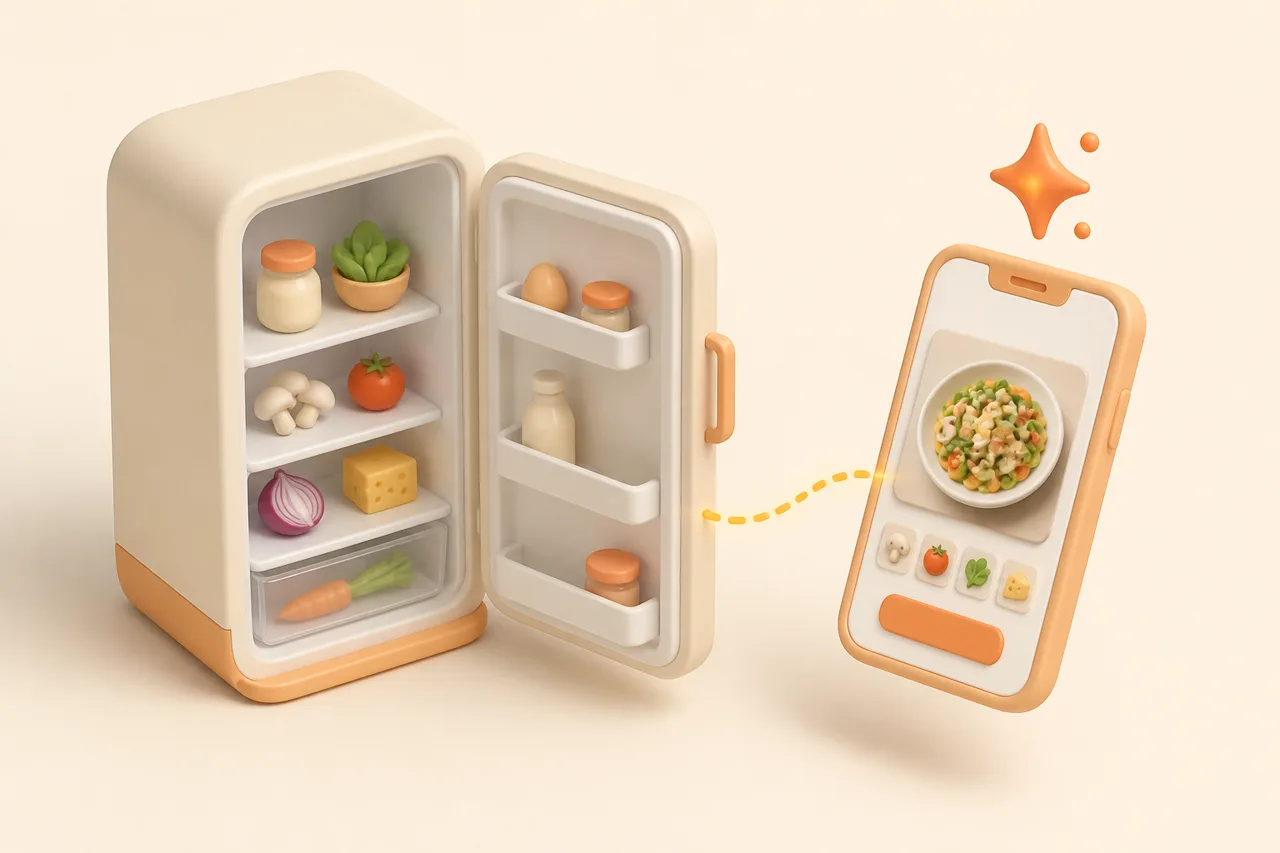
Every app in this category claims to solve the half-cabbage problem. They do it 3 different ways, and only one gives you a recipe someone has cooked.
The problem these apps address is specific and universal: half a cabbage, some chicken, an opened tub of cream and no plan. Working out what that adds up to is a retrieval task, and it is the one people are worst at while standing in front of a fridge.
This is a shortlist by approach rather than brand, since the approach determines whether the suggestion is worth cooking.
What does a pantry recipe app do?
It takes ingredients you already have and returns things you can cook with them, reversing the usual direction where you pick a dish and it tells you what to buy.
The variable between apps is the source of the answer. One searches a large public database, one writes a new recipe, and one searches the recipes you saved yourself. Those produce quite different results from the same input.
A fourth capability sits alongside: some apps also track what you have, either through a manual pantry list or by reading receipts. That sounds appealing and is the feature most likely to be abandoned within a month.
How do the 3 approaches compare?
The trade is between always getting an answer and getting an answer somebody has cooked.
| Approach | Strength | Weakness |
|---|---|---|
| Public database search | Enormous coverage, real recipes | Suggestions from strangers' tastes |
| Generated recipe | Always returns something | Untested, risky in baking |
| Your own library | Recipes you already liked | Sometimes returns nothing |
| Pantry inventory tracking | In theory, no input needed | Falls out of date within weeks |
Baking is where generation goes wrong fastest, because ratios and setting times are unforgiving and a plausible-looking recipe can simply fail. For savoury cooking the stakes are lower and generation is more defensible, which what is a pantry recipe generator covers in more detail.
Why does pantry inventory tracking fail?
Because it requires perfect data entry to be useful and offers nothing until it has it. Every partial use of an ingredient is an update: half an onion, most of a bag of rice, 3 of 6 eggs.
Nobody sustains that, and a pantry list that is 70% accurate is worse than no list, since it confidently tells you there are eggs when there are not. The apps that work treat the pantry as an input you provide at the moment of asking rather than a database you maintain.
- Enter the 6 to 10 things that need using, starting with whatever spoils first.
- Name the protein, since it decides the dish more than anything else.
- Assume staples. Oil, salt, flour, rice and pasta need no mention.
- Say how much time you have, or you will get a 90-minute suggestion on a Wednesday.
One exception is worth noting: tracking a freezer is more sustainable than tracking a fridge, because things go in and out whole and infrequently. A list of what is frozen genuinely helps, and freezer meals for busy weeks covers keeping it useful.
What should you look for?
Five capabilities, in the order they affect whether you cook the suggestion rather than reading it and ordering something.
- 1Draws on recipes you saved. A suggestion from your own library is one you already chose once.
- 2Handles partial matches. Telling you a recipe works apart from 1 ingredient is more useful than silence.
- 3Suggests substitutions. If the recipe wants coconut milk and you have cream, say so and say what changes.
- 4Filters by time. The single most useful constraint on a weeknight.
- 5Respects dietary rules. Flag anything in the suggestion that breaks them.
The partial match point is the one that separates a useful app from a frustrating one. Most fridges are 1 ingredient short of several dinners, and knowing which ingredient turns a dead end into a decision, which is what substitute ingredients is for.
How does this fit with weekly planning?
As the flexible part of an otherwise fixed week, rather than as a replacement for planning. The 2 work together and they solve different failures.
A plan handles the shop: 4 dinners decided in advance, one merged list, ingredients in the house. Pantry cooking handles the drift, which is what happens when arrangements change, a meal produces leftovers, or something was bought and forgotten. Plan 7 nights and there is nowhere for any of that to go, so the plan breaks and the vegetables spoil.
| Night | Decided by | Source of the food |
|---|---|---|
| Monday to Thursday | The weekly plan | The shop you already did |
| One midweek night | The pantry app | Whatever needs using |
| One weekend night | Leftovers or eating out | Neither |
The apps that do both from one library have an advantage here that is easy to miss: the midweek suggestion comes from recipes you already liked and already know how to cook, so it is a swap rather than a gamble on the night you have least patience for one. If dietary rules are also in play, check that the suggestion respects them, which best apps for dietary restrictions covers.
What is this actually worth?
Mostly waste reduction, and the numbers are large enough to matter. Household food waste routinely lands near a quarter of what gets bought, concentrated in bagged salad, herbs, half-used vegetables and dairy nobody remembered.
That waste is a retrieval failure rather than a shopping failure: the ingredients were bought with a plan and the plan was forgotten. One pantry dinner a week is roughly 50 meals a year cooked from food already paid for, and it costs no extra effort because it replaces a decision you were making anyway.
The apps that deliver this best are the ones already holding your recipes, because the suggestion arrives from a library you trust rather than from a stranger's database. Reduce food waste at home covers the habits, and cook with what you already have covers doing it without software at all.
One habit multiplies whatever app you choose: keep a shelf or a box in the fridge for things that need using within 2 days. It costs nothing, it makes the input to any pantry search obvious rather than a hunt, and it means the decision gets made while the food is still worth cooking rather than after it is not. Two days is the right window: long enough to be worth planning around, short enough that nothing on the shelf is a lost cause.
On apps, ReciBites vs BigOven covers a long-standing leftovers search, ReciBites vs Flavorish covers generation, and ReciBites vs Samsung Food covers a large free community platform.
- Partial match
- A recipe that fits except for 1 or 2 ingredients. More useful than no result, provided the app names what is missing.
- Pantry inventory
- A maintained list of everything you have. Rarely sustainable, because every partial use of an ingredient needs an update.
- Retrieval failure
- Waste caused by forgetting what you bought and why, rather than by buying too much.
Frequently asked questions
+What is the best pantry recipe app?
One that searches recipes you already saved, since those are dishes you chose and someone has cooked. Database search is the next best option.
+Are generated pantry recipes reliable?
Less than retrieved ones. They always return an answer and nobody has cooked the result, which matters most in baking where ratios are unforgiving.
+Should I keep a full pantry inventory in an app?
Usually not. It needs updating every time you use half an onion, and a list that is 70% accurate is worse than none because it misleads you.
+How many ingredients should I enter?
Six to 10, starting with whatever spoils first. Name the protein and assume staples like oil, salt, rice and pasta.
+Is tracking a freezer worth it?
Yes, more than a fridge. Frozen items go in and out whole and infrequently, so the list stays accurate without constant updating.
+What is a partial match and why does it matter?
A recipe that fits except for 1 ingredient. Most fridges are 1 item short of several dinners, so naming the gap turns a dead end into a choice.
+How much money does pantry cooking save?
Mainly through waste. Households throw away roughly a quarter of what they buy, and one pantry dinner a week uses food already paid for.
+Do I need an app for this at all?
No. Leading with whatever spoils first and pairing it with a protein and a starch covers most of it, though an app removes the recall problem.
- #pantry
- #food waste
- #app comparison
- #ai