

AI and Smart Kitchen
What can I make with what is in my fridge?
Half a cabbage, 3 eggs and some sad coriander is a dinner, not a problem. Here is the method for choosing what to cook from what you already own, without a shopping trip.
You open the fridge, see half a cabbage, 3 eggs, a heel of parmesan and some coriander going soft, and you order takeaway. The ingredients were never the problem.
Choosing is the problem. This guide gives you a repeatable way to get from a shelf of unrelated items to a decision in about 2 minutes, plus a clear sense of which substitutions are safe and which will wreck the dish.
What does cooking from your fridge mean?
Cooking from your fridge means choosing the dish after you know the ingredients, rather than choosing a recipe first and shopping to fill the gaps. The constraint runs in the opposite direction to how most recipe sites assume you cook.
That reversal changes what a good answer looks like. You are not searching for the best version of a dish, you are searching for the best dish reachable from a fixed set of inputs, which is a different question and usually has several acceptable answers.
Why is choosing harder than cooking?
Choosing is harder because the search space is huge and badly labelled. Recipe search is built around dish names, so it answers "how do I make shakshuka" well and "what works with these 6 things" badly.
- You cannot search by what you own. Ingredient search usually matches one ingredient, not a combination with tolerances.
- Recipes assume completeness. A list of 14 items is a shopping trip disguised as an answer.
- Perishability is invisible. Nothing tells you the coriander needs using tonight and the cabbage has a fortnight.
- Decision fatigue is real. At 7pm, the cost of choosing is higher than the cost of cooking.
The fix is to shrink the decision before you search. Do that by picking 3 ingredients and ignoring everything else in the fridge.
What is the 3 anchor ingredients method?
The 3 anchor method says to choose one protein, one bulk carbohydrate or vegetable, and one flavour driver, then find a dish that uses those 3. Everything else in the fridge becomes optional rather than part of the puzzle.
Anchor 1: the protein
Pick the protein with the shortest life left, including eggs, tinned fish, beans and leftover cooked meat. This anchor sets the cooking method more than any other, because chicken thighs and a tin of chickpeas lead to different dishes.
Anchor 2: the bulk
Pick whatever will make it a meal: rice, pasta, potatoes, bread, tortillas or a large vegetable. Bulk is the most substitutable anchor, so let the pantry decide it.
Anchor 3: the flavour driver
Pick the thing that decides which cuisine you are cooking: miso, gochujang, harissa, a lemon, a hard cheese, a bunch of herbs. This anchor does the most work and gets skipped most often, which is why fridge dinners taste flat.
Three anchors is deliberate. Two leaves the dish undetermined, and four starts reintroducing the paralysis you were trying to escape, because the number of valid combinations collapses fast as you add constraints.
Should you cook inventory-first or recipe-first?
Use inventory-first on weeknights and recipe-first when you are cooking for other people. They optimise for different things, and running the wrong one is why midweek dinners turn into supermarket runs.
| Inventory-first | Recipe-first | |
|---|---|---|
| Starts with | What is already in the fridge | A dish you want to eat |
| Shopping | Zero to 3 top-up items | A full list, usually 8 to 15 lines |
| Waste | Low, because it clears what is ageing | Higher, because part-used items get stranded |
| Decision time | 2 minutes with a method, 20 minutes without one | Fast to pick, slow to execute |
| Best for | Tuesday, and the day before a shop | Guests, weekends, learning a technique |
Running inventory-first two nights a week is usually enough to clear the fridge before a shop. That single habit is the largest lever in reducing food waste at home, ahead of any storage container.
How far can you push a substitution?
Swap freely in aromatics and vegetables, cautiously in fats and acids, and almost never in baking. The rule of thumb is that anything doing chemistry is fixed and anything doing flavour is negotiable.
| Component | Swap tolerance | Example |
|---|---|---|
| Aromatics and herbs | High | Spring onion for shallot, parsley for coriander, with a flavour shift you will notice and accept |
| Vegetables | High, within texture class | Courgette for aubergine works; carrot for spinach does not |
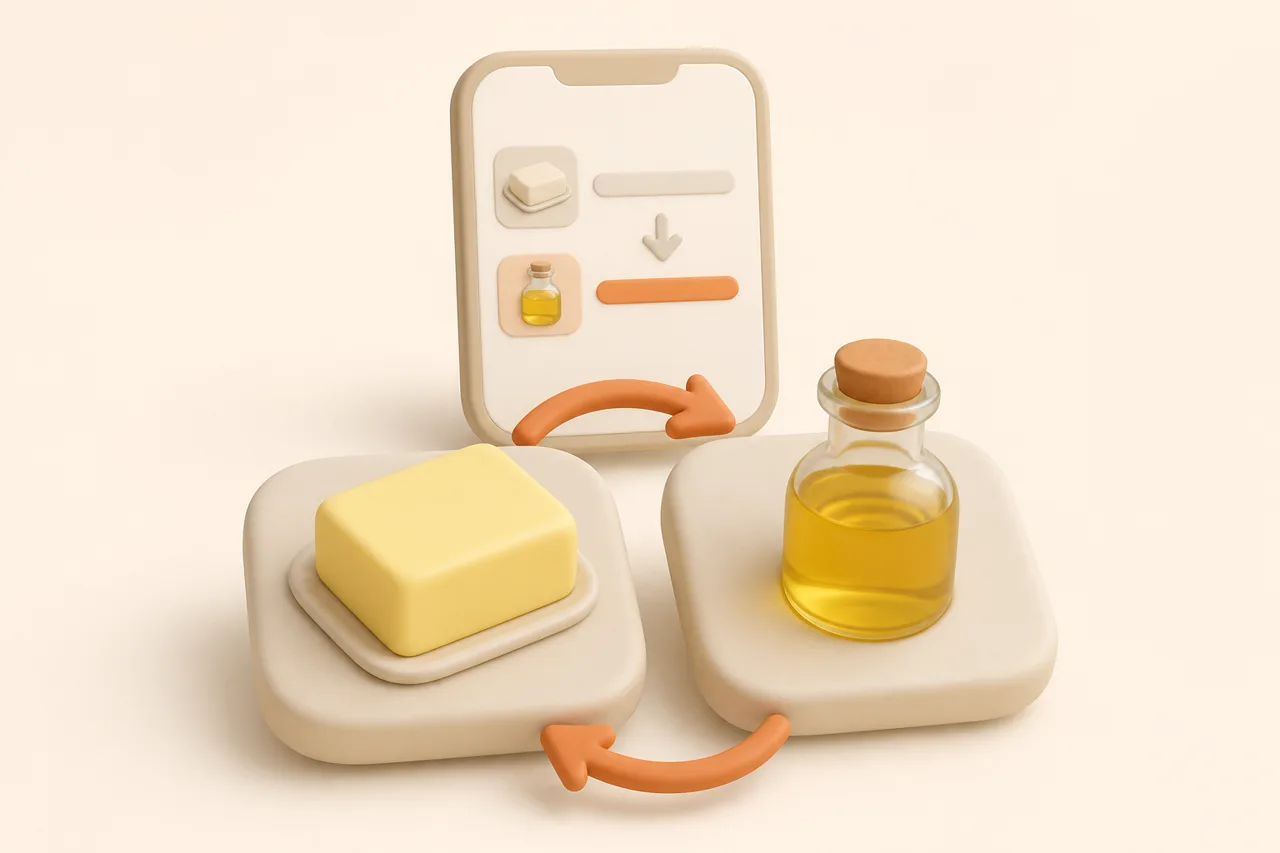
| Cooking fat | Medium | Oil for butter is fine in a stir-fry, not in a sauce built on browned butter |
| Acid | Medium | Lemon for vinegar at roughly equal volume, tasting as you go |
| Thickeners and starch | Low | Cornflour and plain flour behave differently and need different amounts |
| Baking structure | Very low | Flour, eggs, sugar and leavening set the structure, so swaps change the result, not the flavour |
Ratio matters as much as identity. A swap at the wrong volume fails even when the ingredient was a reasonable choice, and the working ratios are collected in how to substitute ingredients.
How do you avoid the shopping trip?
Set a hard cap of 3 top-up items and cook whatever fits inside it. Without a cap, every fridge dinner quietly becomes a supermarket visit and the exercise loses its point.
- 1Photograph the shelf. One photo of the fridge and one of the pantry beats trying to remember at the shops.
- 2List only the anchors. Three items, not an inventory of 40.
- 3Search by combination, not by dish. Ask what works with these 3, then filter by the time you have.
- 4Cap the gaps at 3. If a dish needs 5 things you do not own, it is a recipe-first dish for another day.
- 5Cook the shortest-life anchor first. Tonight's dish should be the one that stops something being binned.
The cap is doing the real work here. It rules out the recipes that look appealing and quietly require a trip, which is the failure mode that turns a 20-minute dinner into an hour.
A stocked pantry raises the cap for free. Six items — stock cubes, tinned tomatoes, a neutral oil, an acid, dried chilli and one long-life starch — turn most fridge remnants into a dish, and the full list is in cooking with what you have.
What should you check before cooking leftovers?
Check the food before you check the recipe. Software can suggest a dish, but nothing in an app can tell you whether the chicken from Sunday is still good.
- Cooked leftovers: treat 3 to 4 days in the fridge as the working limit, and reheat until piping hot throughout.
- Rice: cool fast, refrigerate within an hour, and reheat once only.
- Raw meat and fish: use the date on the packet rather than a recipe suggestion.
- Smell and look first. If you are debating it, you already know the answer.
Follow your local food safety guidance over anything an assistant suggests. This is the clearest example of the limits described in what AI cooking assistants do, because an assistant cannot see or smell your fridge.
How does ReciBites use your leftovers?
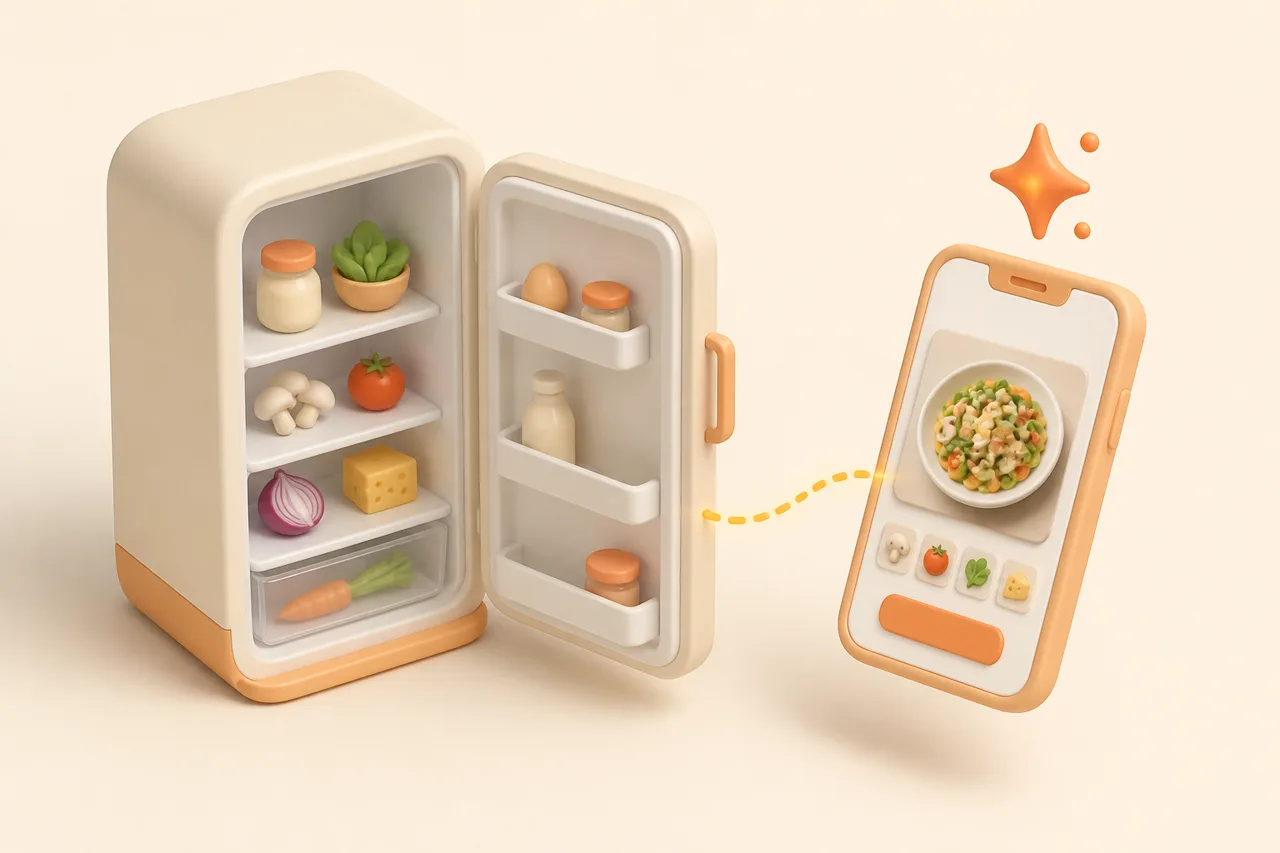
ReciBites suggests recipes from leftover fridge ingredients, drawing on the recipes you have already saved as well as new ones. You tell it what you have, and it matches against your library rather than sending you back to a search engine.
The AI cooking assistant then handles the gaps: swapping an ingredient you lack, scaling the dish to the amount of chicken actually left, converting measurements, and adapting for halal, vegan, gluten-free or allergy needs. Anything you do not cook tonight can go straight into next week's plan, where the grocery list merges duplicates and groups by aisle. ReciBites is free to download with an optional Pro subscription.
Other apps frame this differently, so check BigOven compared for its leftover search, Flavorish compared for generated dishes rather than matches from your library, and Mealime compared for planning forward instead of clearing backwards.
Pair the habit with a light weekly plan and the fridge stops surprising you. The planning side is covered in how to meal plan, and leaving 2 unplanned nights is what makes the plan survive contact with a real week.
For the tools rather than the technique, pantry and fridge recipe apps compares the 3 approaches and explains why inventory tracking rarely lasts a month.
Frequently asked questions
+What can I cook with what I have in my fridge?
Pick 3 anchors — a protein, a bulk carbohydrate and a flavour driver — then find a dish using those 3. Ignore the rest of the shelf while you decide.
+Is there an app that tells you what to cook with your ingredients?
Yes. ReciBites suggests recipes from leftover fridge ingredients and matches them against recipes you have already saved, then fills gaps with substitutions and scaling.
+How do I stop wasting food in my fridge?
Cook inventory-first two nights a week, anchoring on whatever expires soonest. Clearing the fridge before a shop matters more than storage containers or labels.
+Can I substitute ingredients I do not have?
Usually in aromatics, herbs and vegetables of similar texture. Rarely in baking, where flour, eggs, sugar and leavening set the structure rather than the flavour.
+How long are leftovers safe to eat?
Treat 3 to 4 days refrigerated as the working limit for cooked food, reheated until piping hot. Follow local food safety guidance rather than an app suggestion.
+What should I cook first from my fridge?
Whatever expires soonest. Herbs and salad leaves have days, dairy has a week or two, and root vegetables and pantry staples can wait a month.
+How do I cook dinner without going shopping?
Cap top-up items at 3. If a dish needs more than 3 things you do not own, save it for a night you were shopping anyway.
+Why is it so hard to decide what to cook?
Recipe search is organised around dish names, not around combinations of ingredients you already own. Narrowing to 3 anchors shrinks the decision to something answerable in about 2 minutes.
- #leftovers
- #food waste
- #fridge
- #meal ideas