

Meal Planning and Groceries
How to reduce food waste at home: 9 changes that work
Most food is thrown away because nobody saw it in time. These 9 changes make what you own visible, then give you 3 rescue moves for the things that are about to turn.
Nobody throws food away on purpose. It happens because a bag of spinach slid behind a jar of pickles on Sunday and reappeared on Friday, by which point the decision had already been made for you.
Waste is a visibility problem with a storage problem attached. These 9 changes tackle both, in the order that gives you the fastest result: buy less blindly, see what you own, rescue what is about to turn.
What is household food waste?
Household food waste is edible food you bought and then discarded, usually because it spoiled before you cooked it. It is distinct from unavoidable scraps such as bones, peel and shells, which are a by-product of cooking rather than a failure of planning.
The distinction is practical. Peelings will always exist, so aim at the avoidable half: the wilted herbs, the third of a cabbage, the yoghurt bought for one recipe. That is the food your changes can actually reach.
Why does food get thrown away?
Four mechanisms account for most of it, and none of them is carelessness. Each one has a matching change further down this page.
- 1Bought without a use. An ingredient with no meal attached to it has no scheduled moment of being eaten.
- 2Stored out of sight. The back of the middle shelf is where produce goes to be forgotten.
- 3Stored wrong. Soft herbs loose in a drawer last days; the same herbs in water last well over a week.
- 4Cooked in the wrong quantity. Portions nobody wants become leftovers nobody claims.
Notice that only the last one happens at the stove. Most waste is decided at the shop and in the fridge door, which is where the highest-leverage changes sit.
Changes 1 to 3: buy for a plan, not a vibe
Waste starts in the trolley. Every item you buy without knowing which meal it belongs to is a bet, and the ones you lose end up in the bin.
1. Shop your own kitchen first
Spend 4 minutes looking in the fridge, freezer and one pantry shelf before you write a list. Note 5 items that need using and build the week around them, so shopping tops up a plan rather than restarting one.
2. Attach every item to a meal
If you cannot name the dish an ingredient is for, do not buy it yet. This single rule kills the half-used jar problem, because jars are almost always bought for a recipe that never got scheduled.
3. Buy loose wherever you can
Loose produce lets you buy 3 carrots instead of a bag of 12. Pre-packed quantities are set by the shop, and the difference between what you need and what the pack contains is waste you paid for.
Changes 4 to 6: make what you own visible
Once food is in the house, the job is stopping it from disappearing. A fridge is a small dark warehouse with no inventory system, so you have to supply one.
4. Zone the fridge and keep an eat-me-first box
Give every category a fixed home: dairy on the coldest shelf, cooked food above raw, produce in the drawers. Then put one open box at eye level for anything with days left, and cook from that box before anything else.
5. Unpack first in first out
When the shopping lands, move the older items to the front and put new stock behind them. It takes 30 seconds and it is the reason supermarkets do it too.
6. Store each item the way it wants to be stored
Storage is where the biggest easy wins hide, because the correct method often doubles or triples an item's usable life for no extra effort. The table further down covers the items that go wrong most often.
Changes 7 to 9: rescue before it turns
The final 3 changes are about acting a day early. Almost everything is rescuable while it is merely tired, and almost nothing is rescuable once it is slimy.
7. Freeze on the good day, not the last day
Freeze bread, meat, cooked batches and even chopped herbs in oil while they are still good. Freezing something the morning it turns preserves the state it is in, which is not the state you want.
8. Keep 3 rescue moves ready
Soup absorbs tired vegetables, a freezer stock bag absorbs onion ends and carrot tops, and a quick pickle absorbs anything crunchy that is losing its nerve. Three moves cover most of what a fridge throws at you.
9. Cook one inventory meal a week
Pick one night where the rule is that no new ingredients are allowed. Fried rice, frittata, soup and traybakes all exist for this, and the habit is expanded in cook with what you have.
How should you store the items that spoil first?
Store by what the item is losing: moisture, light protection or temperature stability. This table covers the offenders that account for most bin trips.
| Item | Store it like this | Rescue when it starts to turn |
|---|---|---|
| Soft herbs (parsley, coriander) | Trim the stems, stand in a jar of water, bag loosely over the top, in the fridge | Blitz with oil and freeze in an ice cube tray |
| Basil | Same jar of water, but at room temperature away from the fridge | Turn the whole bunch into pesto and freeze it |
| Salad leaves | Unwashed, in the bag, with a piece of kitchen paper to absorb moisture | Wilt into a soup or a pasta sauce at the last minute |
| Bread | Cut side down in a bread bin, or sliced and frozen on day one | Toast, breadcrumbs, croutons or panzanella |
| Potatoes and onions | Cool, dark and dry, and stored apart from each other | Any sprouting eye comes off, then roast or mash |
| Berries | Unwashed in the fridge, washed only as you eat them | Freeze on a tray for smoothies or a compote |
| Bananas | Out of the bowl, away from other fruit | Peel and freeze in chunks for baking or smoothies |
| Hard cheese | Wrapped in paper, then loosely in the fridge, not sealed in plastic | Grate and freeze, and keep the rind for soup |
| Cooked rice | Cooled quickly and refrigerated within an hour, eaten within a day | Reheat once, piping hot, as fried rice |
How does ReciBites help with waste?
ReciBites attacks the two ends of the problem: buying more than you need, and not knowing what to do with what is left. Both are planning problems more than cooking problems.
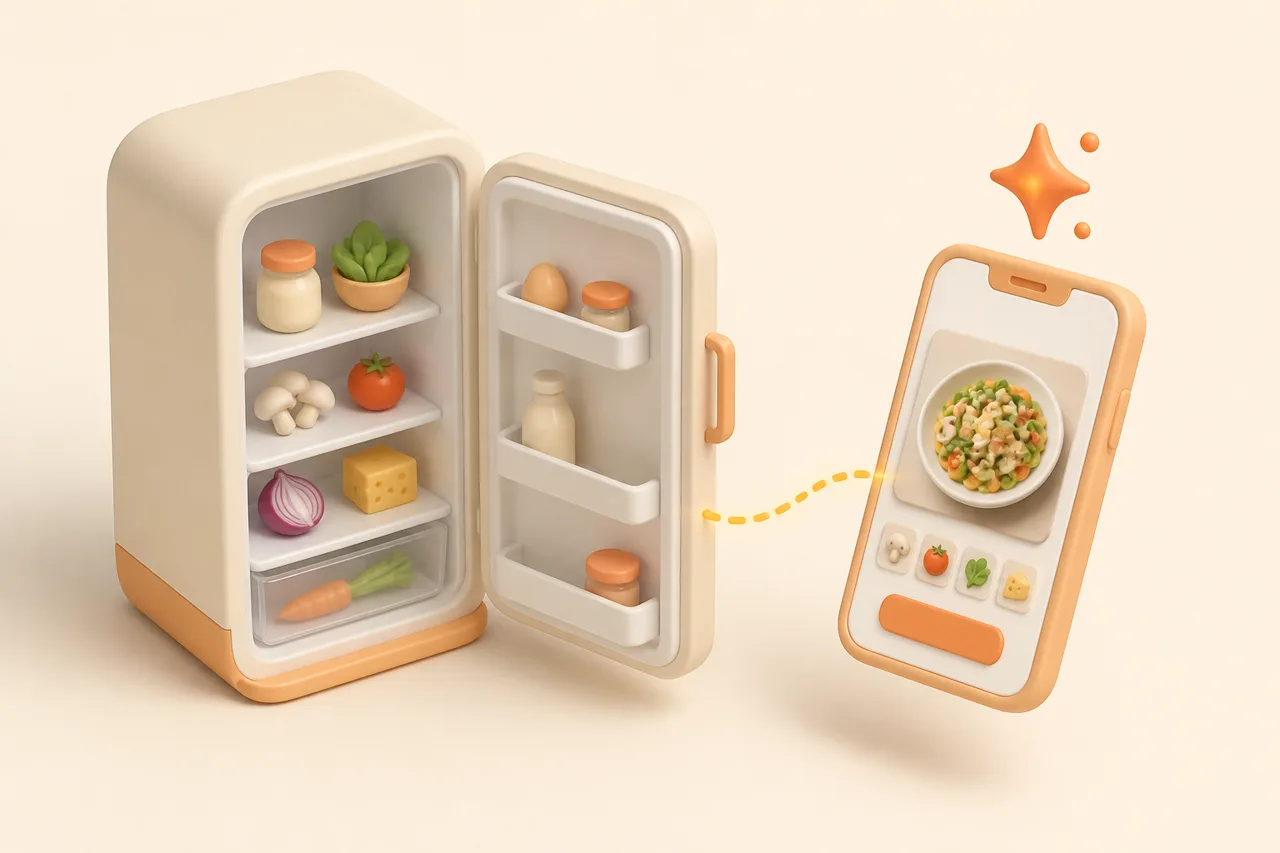
- Cook from the fridge. Tell it what is left and it suggests recipes built around those ingredients.
- One merged grocery list. Duplicate ingredients across the week collapse into a single line, which is how you stop buying 2 bunches of dill. The mechanics are in grocery list from recipes.
- Scale servings honestly. Cook for the number of people actually eating, not the number the recipe assumed.
- Swap rather than shop. The AI cooking assistant adapts a recipe around what you have, including for allergies or a vegan week.
- Plan before you buy. A weekly plan turns the list into a consequence of decisions, as set out in meal plan for a week.
Fridge-first cooking is the habit with the fastest payback, and there is a dedicated walkthrough in what is in my fridge.
What does a low-waste week look like?
It looks unremarkable, which is the point. The bin is emptier because 4 small routines run on schedule, not because anyone is being heroic.
The weekly rhythm
Pros
- Saturday: 4-minute inventory before the list gets written
- Sunday: unpack first in first out and fill the eat-me-first box
- Midweek: cook the box, and freeze anything that will not last to the weekend
- Friday: one inventory meal with no new ingredients allowed
Cons
- A big shop with no plan attached to it
- Storing everything the same way in one crowded drawer
- Waiting until something looks bad before deciding what to do with it
- Buying a specialist ingredient for one recipe and no second use
Substitution is the skill that keeps a low-waste week from becoming an extra shopping trip, and it is covered in substitute ingredients. If you want tooling built around leftovers or shared lists, compare ReciBites and BigOven, ReciBites and Samsung Food and ReciBites and AnyList.
Frequently asked questions
+How can I reduce food waste at home?
Buy only what a planned meal needs, zone your fridge with an eat-me-first box at eye level, unpack older items to the front, and freeze things while they are still good.
+What is the biggest cause of food waste at home?
Buying without a plan and then losing the food at the back of the fridge. Most waste is decided in the shop and on the shelf, not at the stove.
+How do I keep fresh herbs from going bad?
Trim the stems, stand them in a jar of water with a bag loosely over the top, and refrigerate. Keep basil in water at room temperature instead.
+What can I do with vegetables about to go off?
Use one of 3 rescue moves: blend them into soup, drop the trimmings into a freezer stock bag, or quick pickle anything still crunchy.
+Is best before the same as use by?
No. Best before is about quality and use by is about safety. Judge best-before food by look and smell, but respect use-by dates strictly.
+Is there an app that helps me use up leftovers?
Yes. ReciBites suggests recipes based on the ingredients left in your fridge, and its AI cooking assistant can adapt those recipes around what you actually have.
+How do I stop buying food I already have?
Take a 4-minute inventory before writing your list, and shop from one merged list rather than several recipe pages. Duplicates are invisible when recipes stay separate.
+Should I freeze food before or after it starts to turn?
Before. Freezing preserves the current state, so something frozen on a good day thaws well, while something frozen on its last day thaws tired.
+How do I organise my fridge to waste less?
Give each category a fixed shelf, keep cooked food above raw, and reserve one open box at eye level for anything with only days left.
- #food waste
- #food storage
- #meal planning
- #leftovers