

Meal Planning and Groceries
How to cook with what you already have in the pantry
A full cupboard reads as nothing to eat because tins and dry goods are ingredients, not meals. The fix is a 5-part formula that turns any shelf into dinner without a shop.
You open a cupboard holding 3 tins of chickpeas, a bag of rice, pasta, peanut butter and half a jar of olives, and conclude there is nothing to eat. There is roughly 6 dinners in there. The gap is not supplies, it is that dry goods are ingredients and your brain is searching for meals.
This guide is shelf-stable first: a 10-minute audit, a 5-role formula that assembles a meal from whatever survived the week, and the specific moves that stretch an almost bare cupboard one more night.
What is pantry cooking?
Pantry cooking is building meals from shelf-stable food you already own: tins, dried pulses, grains, pasta, oils, vinegars, spices and preserves. You start from stock on hand and work forwards to a dish, rather than picking a recipe and shopping for it.
It is a different job from clearing out perishables. Fridge cooking is a race against a wilting bunch of coriander, and the answers change daily. Pantry cooking has no clock on it, so the constraint is combination rather than time. If your problem is a half-used fridge, work through what is in my fridge instead and come back here for the base layer.
Why does a full cupboard still feel like nothing to eat?
Because you are pattern-matching against named dishes, and no named dish is sitting on the shelf. A tin of chickpeas is not dinner, so it reads as zero even though it is the protein for 4 different dinners.
- Items are invisible in categories you never scan. The back-shelf tins may as well not exist, because you look at the front row and stop.
- A missing side item cancels the whole meal. No coriander becomes no curry, even though the curry needs coriander the way a car needs a bumper sticker.
- Everything looks like a component. Rice, tuna, frozen peas and mayonnaise is a meal, but only after somebody names it.
- Duplicates hide gaps. Four kinds of pasta and no acid at all is a common shelf, and it is the acid you are missing.
The fix is to stop taking inventory of items and start taking inventory of roles. A shelf with 40 items and 2 filled roles cooks badly; a shelf with 9 items across 5 roles cooks well.
What is the 5-role pantry formula?
Every satisfying pantry meal fills 5 roles: a starch, a protein, a fat, an acid and an aroma. Fill 4 of the 5 and you have dinner. Fill 3 and you have a side dish that needs an egg on it.
| Role | What it does | Pantry sources | Skip it and you get |
|---|---|---|---|
| Starch | Bulk and satiety | Pasta, rice, couscous, noodles, potatoes, tortillas, oats | A snack, not a meal |
| Protein | Staying power | Tinned beans, lentils, chickpeas, tuna, eggs, peanut butter, frozen peas | Hunger at 21:00 |
| Fat | Carries flavour and coats the starch | Olive oil, butter, tahini, coconut milk, tinned fish oil, nuts | Dry, dull texture |
| Acid | Lifts everything, makes it taste finished | Lemon, vinegar, pickle or caper brine, tinned tomatoes, yoghurt, mustard | The flat taste people blame on the recipe |
| Aroma | Identity and cuisine direction | Garlic, onion, dried chilli, cumin, smoked paprika, stock cube, soy sauce | Beige food nobody asks for again |
Try it on the shelf described at the top. Pasta plus chickpeas plus olive oil plus the olive brine plus garlic and chilli is a real dinner, and every item was already in the house.
How do you audit a pantry in 10 minutes?
Audit by role and write one line per role, not one line per item. Ten minutes once a month tells you what to buy and what you must eat before it turns dusty.
- 1Empty the front row
Take everything off the front of each shelf so you can see the back. Most forgotten pantry stock is 15cm behind something you bought twice.
- 2Sort into the 5 roles
Group physically on the counter: starches together, tinned protein together, fats, acids, aromatics. The gaps become obvious the moment things are in piles.
- 3Flag the 3 oldest items
Anything opened more than 6 months ago or dated within the next 2 months goes to the front. Ground spices past a year are aroma in name only.
- 4Write the role gaps, not a shopping list
If the acid pile is empty, the note is "acid", and one bottle of red wine vinegar closes it. Buying by role stops you owning a fifth pasta shape.
- 5Reshelve by role
Keep each role in one place. Next month the audit takes 3 minutes because the sorting already happened.
Which meals come out of an almost bare cupboard?
Six formats cover almost every pantry situation, and each one flexes to whatever you have. Learn the format and you stop needing a recipe for the specific combination in front of you.
- 1Pasta with a tinned base. Tomatoes, tuna or beans, plus garlic, oil and chilli. Twenty minutes, 4 roles filled.
- 2Fried rice from cold rice. Any leftover grain, frozen peas, an egg, soy sauce. This is the one that rescues yesterday's batch.
- 3Brothy pulses on toast. Tinned beans warmed with garlic, oil and a spoon of mustard, on anything bread-shaped.
- 4Curry from a tin. Coconut milk or tomatoes, chickpeas or lentils, whatever spice you own. Acid comes from lemon or a spoon of chutney.
- 5Noodle bowl. Dried noodles, stock cube, soy, chilli oil, an egg or frozen vegetables dropped in for the last 3 minutes.
- 6Savoury oats or polenta. Cooked in stock rather than water, topped with cheese, a fried egg or nuts. Cheap, fast, unexpectedly good.
Notice that 4 of the 6 finish with an egg. Eggs are the most useful pantry-adjacent item there is, because they close the protein role for any format on the list.
How do you stretch the last 3 items?
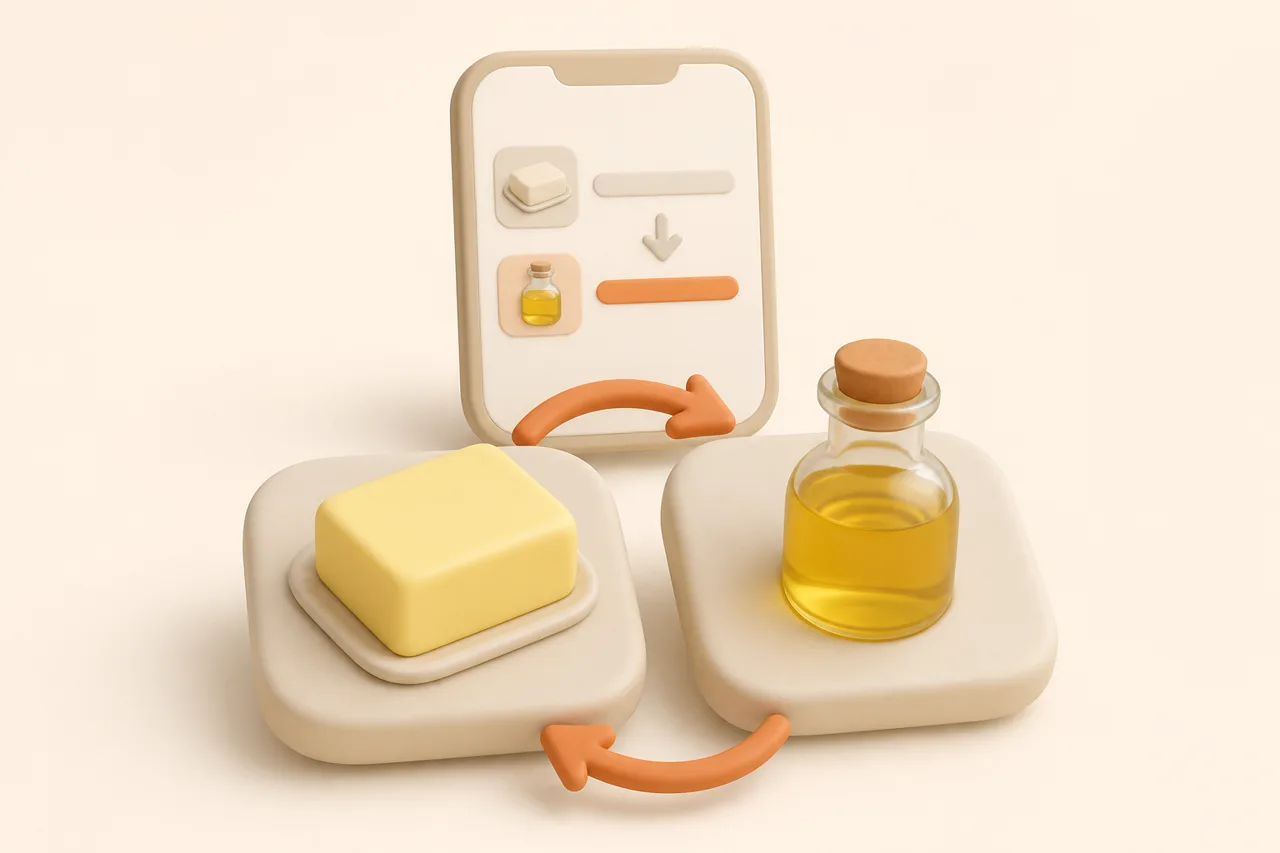
Substitute by role rather than by ingredient. No recipe needs lemon, it needs acid, and the vinegar behind the tins does the same job at the same point in the method.
Role swaps that hold up
These trades change the dish slightly and rescue it completely. Match the quantity by taste rather than by measure, because acids and salts vary in strength.
- No lemon: any vinegar, pickle brine, a squeeze of lime cordial in an emergency, or a spoon of yoghurt at the end.
- No fresh garlic: garlic powder bloomed in the oil, or the oil from a jar of anything pickled.
- No stock: a soy sauce and water mix, a parmesan rind, or the liquid from the tin of chickpeas.
- No fresh herbs: dried herbs added early plus something raw and sharp at the end, such as sliced onion soaked in vinegar for 5 minutes.
- No meat: tinned pulses plus a strong savoury note, such as miso, anchovy, tomato paste or smoked paprika.
The general rules for how far a swap can travel before the dish breaks are set out in how to substitute ingredients. The short version: swap freely within a role, cautiously across roles, never for the structural ingredient in a bake.
How does ReciBites help you cook from the pantry?
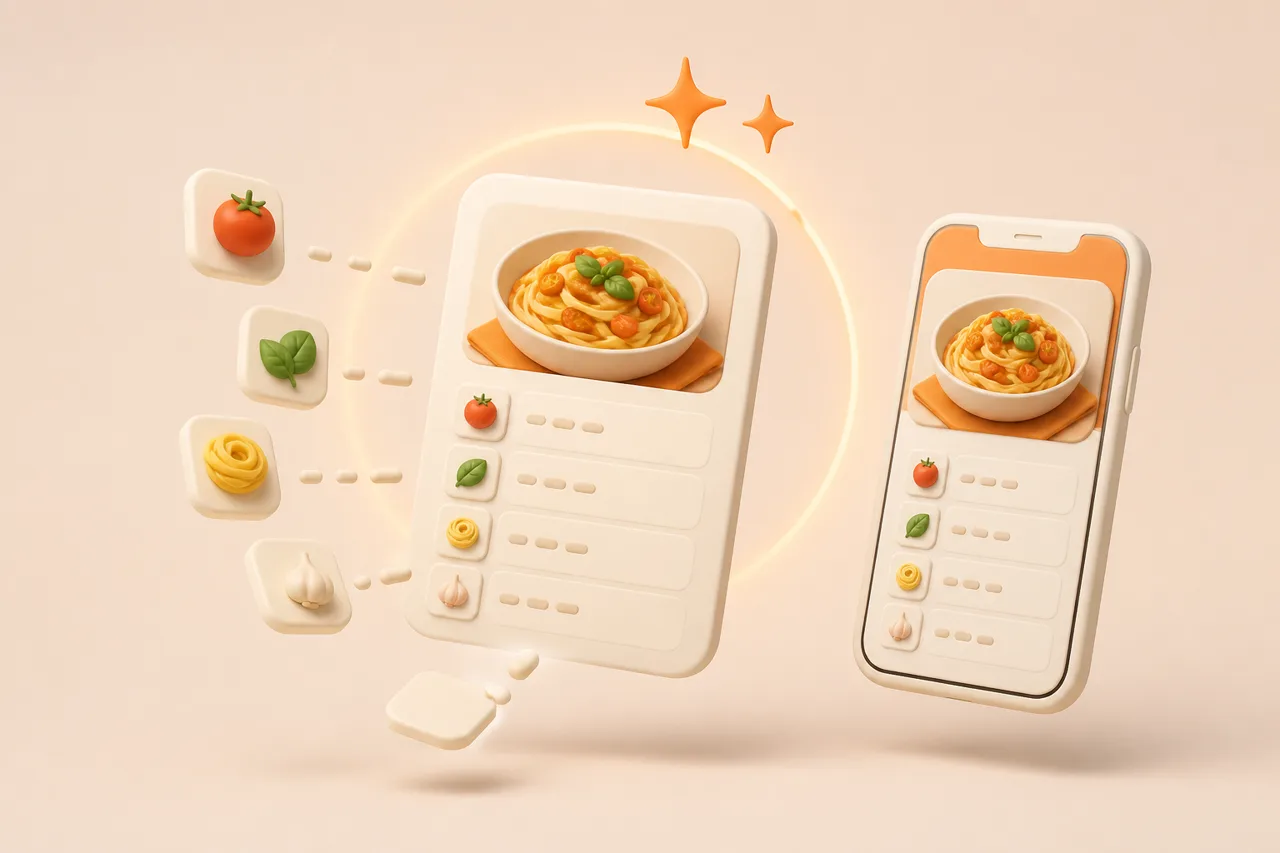
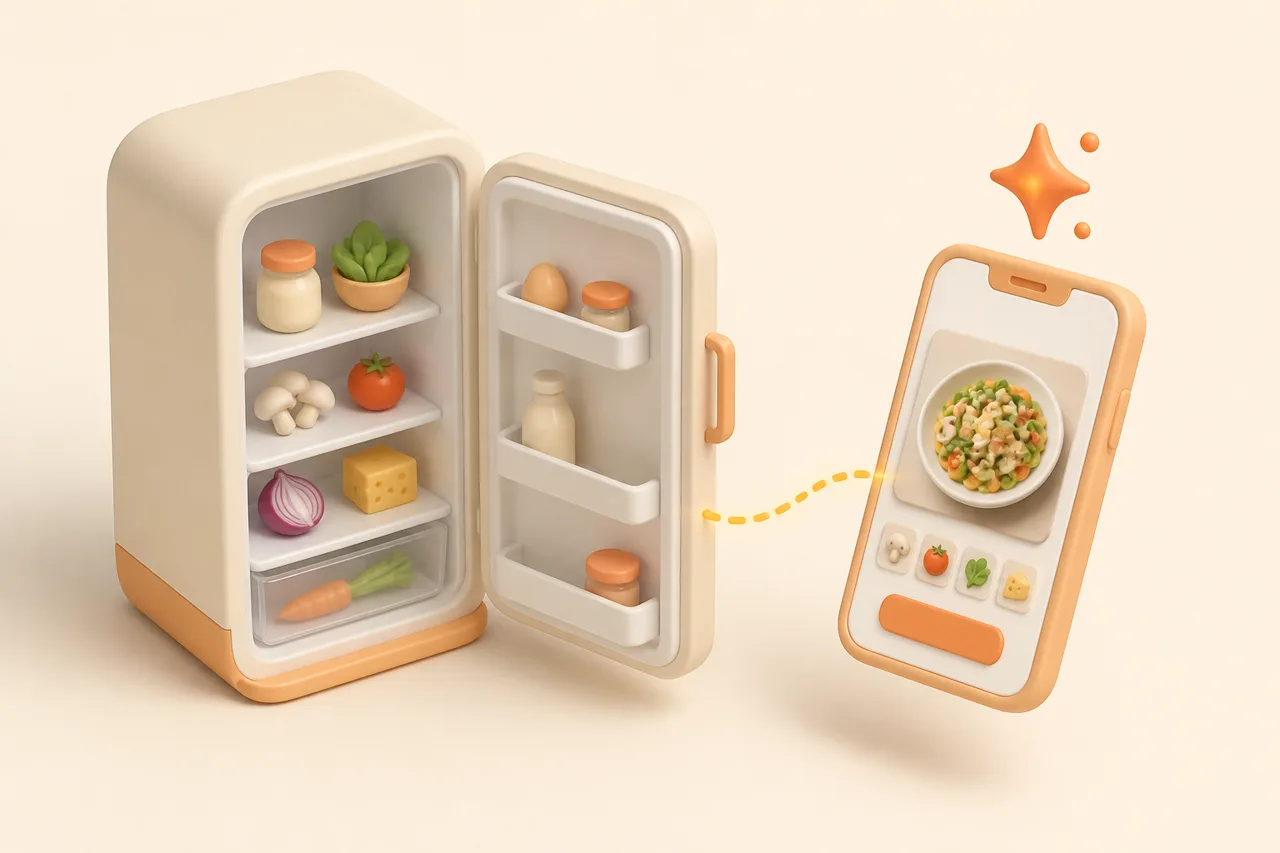
ReciBites works from the ingredients you list rather than from a recipe you have chosen. You say what is on the shelf and it suggests recipes from your own saved library plus adapted versions of them.
- 1List the shelf-stable items you actually have and ask for recipe suggestions built around them.
- 2Ask the cooking assistant to rewrite a recipe without the 2 ingredients you are missing.
- 3Adapt a dish for a dietary need, such as vegan, gluten-free, halal or a specific allergy, without hunting for a new recipe.
- 4Scale the result to the number of people eating and convert any measurement the original used.
- 5Save pantry-only recipes from a website URL, a screenshot, or a photo of a cookbook page so the list of formats grows.
Substitution suggestions are the part worth using here, because they turn a shelf audit into a menu. The wider capability is described in an AI cooking assistant.
What should a restocked pantry hold?
Buy to fill roles, not to fill shelves. About 15 items covers every format on this page, and the restock is cheap because none of it spoils.
Stocking decisions
Pros
- Two starches you like, one fast and one filling
- Four tins of pulses and 2 tins of tomatoes
- One neutral oil, one good olive oil, one vinegar
- Stock cubes, soy sauce and tomato paste for instant savoury depth
- Frozen peas, spinach and a bag of frozen onions
Cons
- A fifth pasta shape while the acid shelf stays empty
- Speciality ingredients bought for one recipe you cooked once
- Ground spices older than a year that no longer smell of anything
- Bulk buys of anything you have never cooked twice
Buying by role also cuts waste, because you stop replacing things you own and start finishing things you opened. The wider habit set is in reduce food waste at home, and pantry stock is the cheapest place to start.
If you would rather be handed prewritten menus with short ingredient lists than improvise, that trade-off is covered in ReciBites and Mealime. If you want recipe discovery attached to your own inventory, see ReciBites and Samsung Food.
One more habit closes the loop: when a pantry improvisation works, save it as a recipe the same evening. Otherwise you reinvent it in 3 months, and the version you invent will be worse. Feed the good ones into your session plan using batch cook for the week.
If you would rather the software did the matching, a pantry recipe generator explains the 2 types and which one returns a recipe somebody has actually cooked.
Frequently asked questions
+What can I cook with only pantry ingredients?
Pasta with a tinned base, fried rice, brothy pulses on toast, a tinned curry, a noodle bowl or savoury oats. Each fills the starch, protein, fat, acid and aroma roles.
+How do I decide what to cook with what I already have?
Sort your shelf into 5 roles: starch, protein, fat, acid and aroma. Any 4 filled roles make a meal, so cook the format your gaps allow.
+Why does my pantry food taste bland?
You are almost certainly missing acid. A splash of vinegar, lemon juice or pickle brine at the end makes tinned and dried ingredients taste finished rather than flat.
+What are the most useful pantry staples to keep?
Two starches, tinned pulses, tinned tomatoes, olive oil, a vinegar, stock cubes, soy sauce, tomato paste, dried chilli and frozen peas. About 15 items cover most meals.
+How can I avoid going shopping this week?
Audit by role instead of by item, then cook the formats your filled roles support. Substitute within a role, and use eggs or tinned pulses to close protein gaps.
+Is pantry cooking the same as using up leftovers?
No. Leftover cooking races perishables in the fridge. Pantry cooking uses shelf-stable stock with no deadline, so the constraint is combination rather than spoilage.
+Can an app suggest recipes from ingredients I have?
Yes. ReciBites suggests recipes from ingredients you list, and its cooking assistant rewrites a recipe when you are missing something or need it adapted for a diet.
+How long do dried herbs and spices actually last?
Ground spices lose most of their aroma within a year. If a jar smells of nothing when you open it, it contributes nothing to the dish and should be replaced.
- #pantry cooking
- #shelf stable
- #no shop
- #substitutions