

Special Diets and Fitness
How to find dairy-free substitutes that behave the same
Oat milk is not milk with the dairy removed. Work out whether the recipe needs the fat, the protein or the acidity, and the right dairy-free swap becomes obvious.
Swap whole milk for almond milk in a batter and the cake comes out pale, slightly damp and oddly bland. Nothing went wrong with your technique. The recipe was relying on fat, protein and milk sugars, and almond milk brought almost none of them.
This guide works backwards from the job dairy was doing in the recipe, gives ratios for the swaps that hold up, and names the dishes where you should cook something else instead.
What is a dairy-free substitute?
A dairy-free substitute is an ingredient that performs the same function as milk, butter, cream or cheese in a recipe without containing any milk-derived component. That is a stricter definition than lactose-free, which removes the sugar but keeps the milk proteins.
The distinction matters at the shelf. Lactose-free milk is unsafe for a milk allergy, ghee contains traces of dairy protein, and some plant cheeses include casein, which is a milk protein by definition.
So a good swap has to clear two tests: it behaves like the original in the pan, and it genuinely contains no dairy. Most guides only check the first one.
What is dairy actually doing in the recipe?
Dairy performs 5 separate jobs, and most recipes only need two or three of them. Name the ones your recipe depends on and the shortlist of replacements writes itself.
- Fat. Carries flavour, tenderises crumb, enriches sauces. Butter is roughly 80 percent fat and 16 percent water.
- Water. Milk is about 87 percent water, so it is often hydrating flour as much as enriching it.
- Protein. Casein and whey set custards, help emulsions hold and give cheese sauce its body.
- Browning. Lactose plus protein drives the Maillard reaction, which is what colours a crust.
- Acidity. Buttermilk and yoghurt activate baking soda and tenderise gluten.
Two of those explain most failed swaps. Almond milk fails at browning because it has little sugar or protein, and a low-fat oat drink fails in a sauce because there is nothing to carry the flavour.
Which dairy-free swaps behave the same?
These are the swaps that hold up in normal home cooking, with the behaviour difference stated plainly. Use unsweetened, unflavoured versions unless the recipe is a dessert.
| Dairy | Best swap | Ratio | How it behaves differently |
|---|---|---|---|
| Milk, 1 cup | Barista or full-fat oat milk | 1 for 1 | Browns well because of its sugars. Slightly sweeter, marginally thicker batter |
| Butter in pastry, 100 g | Block vegan butter, not a tub spread | 100 g by weight, kept cold | Softens faster, so chill the dough 10 minutes longer than usual |
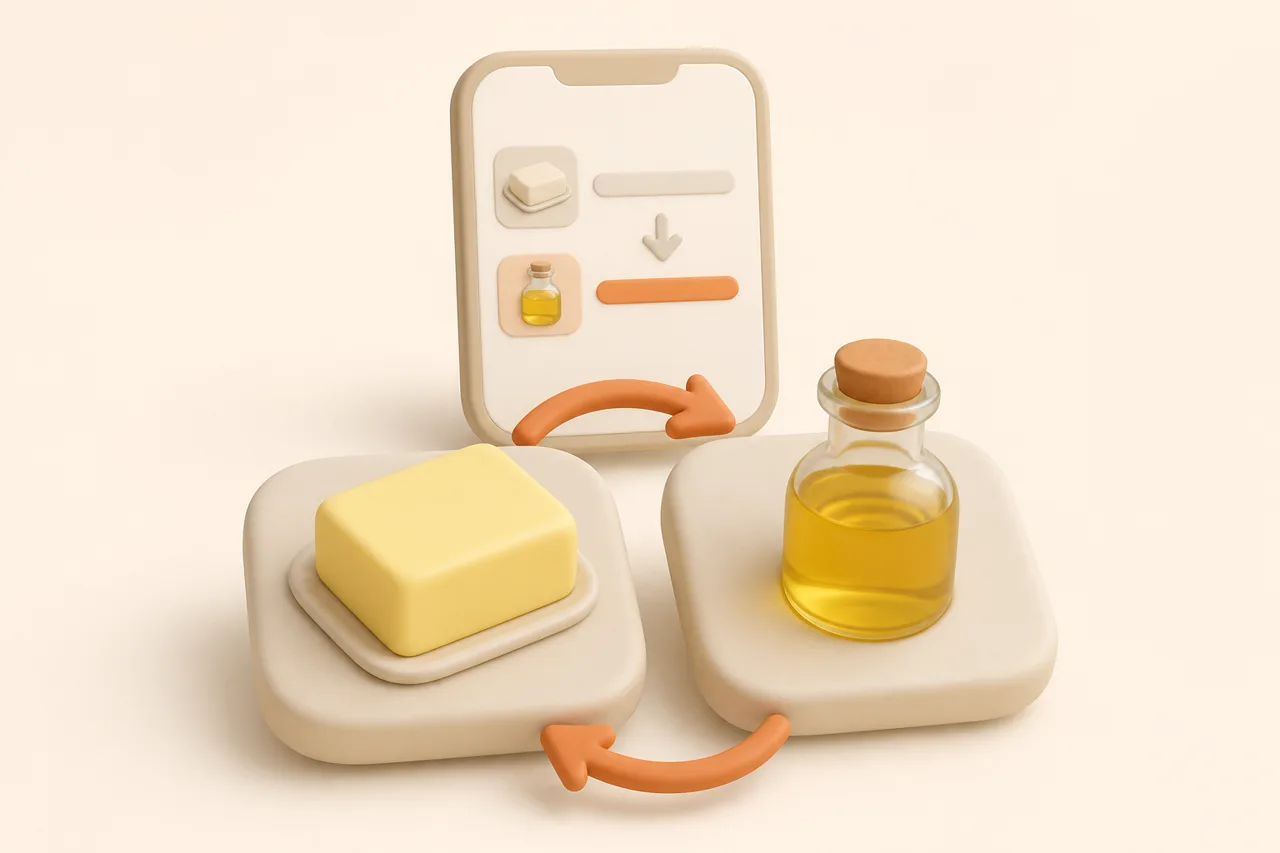
| Butter in a cake, 100 g | Neutral oil | About 80 g oil plus 15 ml liquid | Moister and denser. You lose creamed aeration, so lean on baking powder |
| Double cream, 200 ml | Full-fat coconut cream | 1 for 1, chilled overnight to whip | Whips softer and adds coconut flavour. Fine in curries, obvious in vanilla desserts |
| Cream in a savoury sauce | Blended cashew cream | 100 g soaked cashews to 120 ml water | Thickens on standing rather than reducing. Neutral, and it will not split |
| Hard cheese for melting | Starch-based vegan block, grated | 1 for 1 | Melts but does not brown or stretch the same. Grate finely and add heat slowly |
| Parmesan for finishing | Nutritional yeast plus ground almonds and salt | 2 parts almonds to 1 part yeast | Delivers the savoury note, not the crystalline texture |
| Yoghurt, 200 g | Unsweetened soy yoghurt | 1 for 1 | Holds in warm sauces better than coconut yoghurt, which is sweeter and thinner |
| Buttermilk, 1 cup | Soy milk plus lemon juice | 1 cup soy milk plus 1 tbsp acid, rest 10 minutes | Soy protein curdles properly, so it thickens. Oat and almond barely react |
How to read the ratios
Ratios in the table assume standard cup and tablespoon measures, and fat swaps are given by weight because volume is unreliable for anything solid. If your recipe mixes weights and volumes, settle that first with convert recipe measurements.
How do plant milks differ from each other?
Plant milks are not interchangeable, because their fat, protein and sugar contents vary widely. Pick per recipe rather than keeping one carton for everything.
Oat and soy, the two workhorses
Oat milk is the default for baking and coffee: its sugars brown, and barista versions carry enough fat to stop a sauce tasting thin. Soy carries the most protein of the common options, which makes it the one to reach for when a recipe needs to set, thicken or curdle deliberately.
Almond, coconut and cashew
Almond milk is mostly water and works in smoothies and porridge, not in custard or a pale sponge. Tinned coconut milk brings real fat and real flavour, so it belongs in curries and rich desserts, while blended cashew is the neutral choice for savoury cream.
Keep two cartons rather than five. Oat for baking and coffee, soy for anything that has to thicken, and a tin of coconut cream in the cupboard covers almost every recipe a home kitchen produces.
Where do dairy-free swaps fail?
Three dishes resist every swap on the market, because they depend on milk proteins doing something plant ingredients do not do. Recognising them early saves an ingredient bill.
Custards and anything egg-and-cream set
Creme patissiere, panna cotta and baked custard rely on dairy protein coagulating alongside egg. Plant milks either stay loose or need a starch and a setting agent, which produces a decent dessert rather than the original one.
Ganache and tempered chocolate work
Ganache is an emulsion held by butterfat, and coconut cream is the only common swap that comes close. Even then it sets firmer and tastes of coconut, so plan the flavour around it instead of hiding it.
Creamed cakes and laminated pastry
Creaming works because sugar crystals cut air pockets into solid butter that hold their shape. Tub spreads are too soft and too wet, so use a firm block or switch to an oil-based recipe designed for it rather than converting one.
The honest rule for all three: if the dairy is the structure, pick a different recipe. If the dairy is the enrichment, swap it and nobody at the table will notice.
How do you fix a swap that came out wrong?
Most dairy-free disappointments come down to 4 fixable causes. Work through them in order before you conclude the recipe cannot be adapted.
- 1Pale bake? Move to oat or soy milk and brush the top with a little oat milk and maple syrup for colour.
- 2Thin sauce? You lost fat and protein. Add cashew cream or a small roux rather than reducing it further.
- 3Split in coffee or a hot sauce? Acid and heat curdled the plant protein. Use a barista formulation and warm it before combining.
- 4Flat flavour? Dairy was carrying salt and umami. Add a pinch more salt, a teaspoon of nutritional yeast or a little miso.
Change one variable at a time and write the result on the recipe. The general framework behind these fixes, applied to every ingredient category, is in substituting ingredients.
Is dairy-free automatically safe for a milk allergy?
No. Dairy-free describes a recipe choice, while an allergy-safe product requires verified labelling and a kitchen free of cross-contact. The two overlap often enough that people assume they are the same, which is where accidents happen.
For a diagnosed allergy, the substitution is the easy half. The protocol for the rest, including equipment and sequencing, is in adapting recipes for allergies.
How do you keep dairy-free versions organised?
Save the adapted recipe as its own version rather than annotating the original in your head. A recipe you have already fixed is worth more than the one you keep re-fixing.
ReciBites saves recipes from TikTok, Instagram, YouTube and any website, and its AI cooking assistant can adapt a saved recipe for dietary needs including dairy-free, vegan and allergies. It also scales servings and converts measurements, which matters because a swap ratio changes when you double a recipe.
Treat the assistant output as a first draft you test once. There is more on how that kind of tool behaves in an AI cooking assistant.
If your priority is a tidy personal library of tested versions, weigh the approaches in ReciBites versus Paprika and ReciBites versus Flavorish.
- Casein
- The main protein in milk. It sets cheese and thickens sauces, and it appears in some products marketed as plant-based.
- Barista formulation
- A plant milk with added fat and stabilisers so it resists curdling in hot, acidic liquid and foams properly.
- Maillard browning
- The reaction between sugars and proteins that colours and flavours a crust. Low-sugar plant milks produce far less of it.
- Cashew cream
- Soaked cashews blended with water into a neutral, pourable cream that thickens on standing and does not split when heated.
Frequently asked questions
+What is the best dairy-free substitute for milk in baking?
Full-fat or barista oat milk, 1 for 1. Its sugars brown like dairy milk and it carries enough fat to keep the crumb tender. Soy is the next best option.
+What can I use instead of butter if I am dairy-free?
Use a block vegan butter by weight for pastry and biscuits. In cakes, about 80 g of neutral oil replaces 100 g of butter, plus a splash of liquid.
+Which plant milk works best in savoury sauces?
Soy for body and setting, or blended cashew cream for richness. Almond is too watery, and unsweetened oat sits in between.
+Can I whip coconut cream like double cream?
Yes, if you chill a full-fat tin overnight and whip only the solid layer. It holds a softer peak than dairy cream and tastes of coconut.
+Why did my dairy-free cake come out pale?
Almond or rice milk has little sugar or protein, so there is nothing to brown. Switch to oat or soy milk and glaze the top before baking.
+Is lactose-free milk dairy-free?
No. Lactose-free milk has the sugar removed but still contains milk proteins, so it is unsuitable for a milk allergy or a vegan diet.
+How do I make dairy-free buttermilk?
Add 1 tablespoon of lemon juice or vinegar to 1 cup of soy milk and rest it 10 minutes. Soy curdles properly because of its protein content.
+Are vegan cheeses safe for a milk allergy?
Not always. Some contain casein, a milk protein, and others are made on shared equipment. Read the ingredient list and the precautionary warning on the packet.
- #dairy free
- #substitutions
- #vegan
- #baking