

Special Diets and Fitness
How to manage a vegan recipe collection that stays interesting
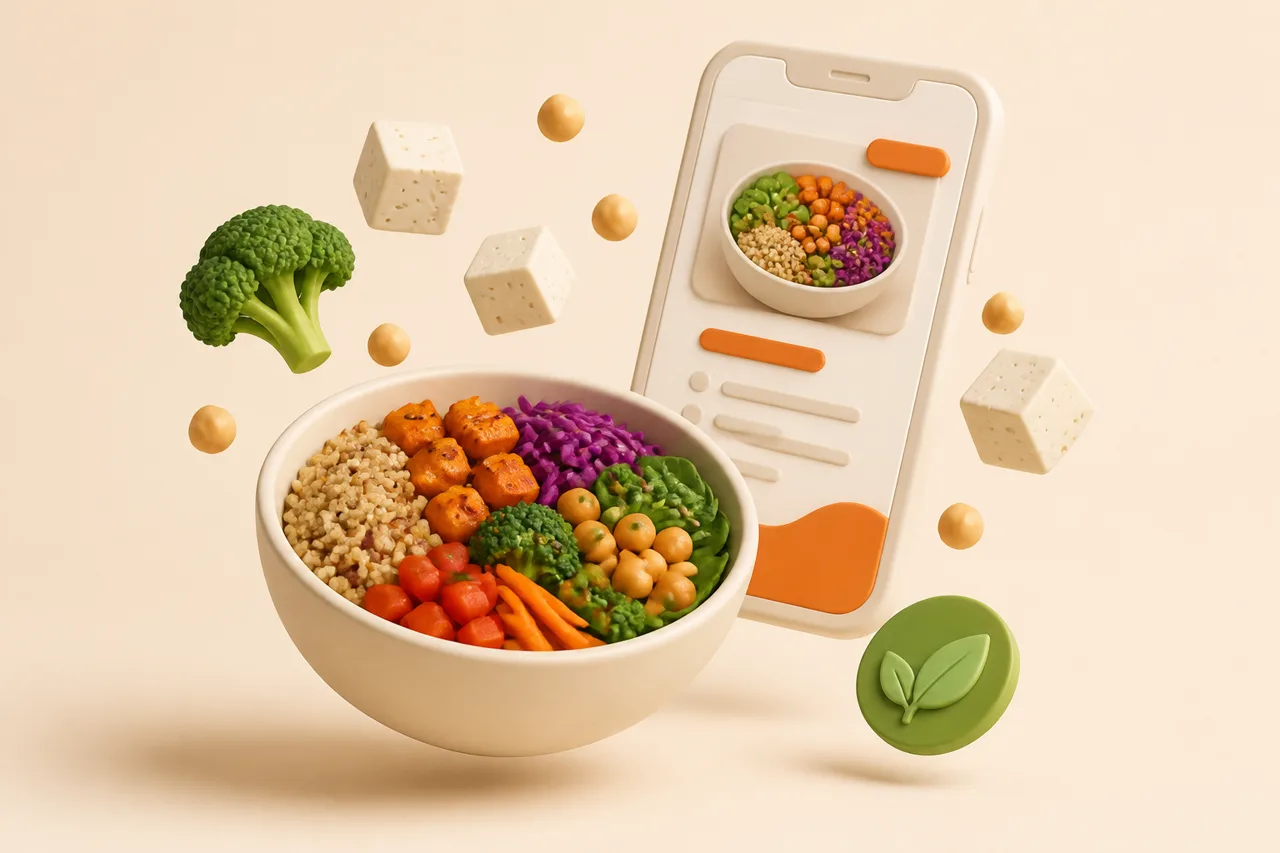
Most vegan cooking ruts are a library problem, not a cooking problem. You saved 200 recipes and cook 9 of them, and 6 of those taste like the same bowl.
Ask a vegan cook what they ate last week and you often get 3 answers repeated: a grain bowl, a curry and a pasta. The recipes are not the bottleneck, because the same cook usually has hundreds saved.
The bottleneck is that saved recipes cluster. This guide covers how to audit that clustering, the 4 levers that stop plant food tasting flat, and how to convert omnivore recipes without producing a worse version of the original.
What is a vegan recipe collection worth keeping?
A vegan recipe collection worth keeping is one you can query by what makes a meal different — protein, cuisine, cooking method and texture — rather than one sorted by where you found it. Storage is trivial; retrieval by variety is the part that changes what you eat.
The test is simple. Open your library and try to answer "what have I got that is high-protein, not a bowl, and not Italian?" If that takes more than 30 seconds, the collection is a pile rather than a system.
Why do vegan recipe collections get repetitive?
Collections get repetitive because saving is driven by algorithms and cooking is driven by habit. Social feeds show you more of what you already engaged with, so a library grows deep in one direction while looking large overall.
- Format clustering. Twenty recipes that are all a grain, a roasted vegetable and a tahini sauce.
- Protein clustering. Chickpeas in everything, because chickpeas are forgiving and always in the cupboard.
- Effort clustering. Everything saved is either 15 minutes or 2 hours, with nothing in between for a normal Wednesday.
- Season blindness. Recipes saved in January get cooked in July with worse tomatoes.
Run a rotation audit once a quarter. Tally the last 20 meals you actually cooked by protein and by cuisine, and the gap between what you save and what you eat becomes obvious in about 5 minutes.
What are the 4 levers that stop vegan food tasting samey?
Plant food tastes flat when it is missing savoury depth, acid, fat or textural contrast. Meat and dairy supply all 4 at once, so removing them means adding each one deliberately rather than swapping one ingredient for another.
| Lever | What it fixes | Where to get it | When to add it |
|---|---|---|---|
| Umami | The dish tastes thin and vegetal | Miso, dried mushrooms, tomato paste, soy sauce, nutritional yeast, marmite | Early, cooked into the base |
| Acid | Everything blurs into one heavy note | Lemon, vinegar, pickles, sumac, tamarind, preserved lemon | At the end, off the heat |
| Fat | Flavour does not carry or linger | Tahini, olive oil, coconut milk, cashew cream, nut butters | Both during and as a finish |
| Texture | The whole bowl is soft and the same | Toasted nuts, crisp chickpeas, raw shaved fennel, fried shallots, croutons | Immediately before serving |
Keep a fifth category in mind as well: browning. Roasting, searing and charring produce the savoury compounds that make meat dishes taste finished, and vegetables need longer and hotter than most recipes suggest.
How do you build protein variety across a week?
Rotate the protein source rather than the seasoning, because the protein sets the texture of the whole meal. Aim for 4 or 5 different sources across a week instead of chickpeas 5 nights running.
| Source | Approximate protein per 100 g cooked | Texture it brings |
|---|---|---|
| Firm tofu | About 16 g | Absorbs marinade, crisps when pressed and roasted |
| Tempeh | About 19 g | Firm and nutty, good sliced and pan-fried |
| Seitan | About 25 g | Chewy and dense, the closest to a braise |
| Cooked lentils | About 9 g | Soft, thickens sauces and ragùs |
| Chickpeas | About 9 g | Holds shape, crisps well in a hot oven |
| Edamame | About 11 g | Fresh and firm, works cold in salads |
| Cooked quinoa | About 4 g | A base rather than a protein hit |
Pair a lower-protein base with a higher-protein topping and you avoid the meal that fills you up for 90 minutes. If you are working to a specific number, the arithmetic is covered in high-protein meal prep.
How do you convert an omnivore recipe to vegan?
Convert by function, not by lookalike. Ask what the animal ingredient was doing — binding, browning, adding fat, adding salt, providing chew — and replace that job, because a direct swap usually loses two of the four things it was doing.
- 1Identify the job. Egg in a cake binds and lifts; egg in a carbonara emulsifies. Different jobs, different replacements.
- 2Replace fat with fat. Butter in pastry needs a solid fat, not oil, or the texture collapses.
- 3Rebuild the savoury base. Anchovy, fish sauce and bacon were carrying umami. Miso, soy and dried mushroom cover it.
- 4Adjust the liquid. Plant milks and cream substitutes are thinner, so reduce longer or add a starch.
- 5Re-season at the end. Removing cheese removes salt, and undersalted vegan food is what people describe as bland.
The ReciBites AI cooking assistant does the first pass of this on a saved recipe, rewriting the ingredient lines and the affected method steps for a vegan version. Treat the output as a draft to taste and adjust, and see substituting ingredients for the reasoning behind each swap.
Which animal products hide in vegan-looking recipes?
The recurring offenders are ingredients most people read as plant-based or as processing details. They appear in recipes that otherwise contain no meat or dairy at all.
- Honey in dressings, marinades and granola. Maple syrup or agave replaces it directly.
- Fish sauce and shrimp paste in South East Asian recipes, often only in the method step.
- Worcestershire sauce contains anchovy in most standard formulations.
- Whey and casein in crisps, stock powders, chocolate and anything labelled only vegetarian.
- Gelatin in mousses, marshmallows and some sweets used as a topping.
- Wine and beer are sometimes fined with isinglass or egg white, which the label rarely states.
- Refined sugar in some regions is filtered through bone char, which is never on the label.
How do you structure the library so variety is visible?
Tag along the axes you actually pick meals by, then keep the tag count low enough that you maintain it. Three tags per recipe is the practical ceiling before tagging becomes a chore you skip.
- 1Protein tag:
tofu,lentil,tempeh,bean,seitan. This is the one that surfaces rotation gaps fastest. - 2Effort tag:
weeknight,weekend,batch. Effort is why a recipe stays uncooked far more often than difficulty. - 3Format tag:
bowl,traybake,soup,handheld,pasta. Format clustering is invisible until you count it.
Once tagged, plan from the gaps rather than the feed. Pick a protein you have not used in 2 weeks, then filter, and the weekly plan writes itself in the time it takes to make coffee. The full routine is in weekly meal planning, and batching one component ahead is covered in batch cooking for the week.
Which tools handle a vegan library well?
Judge a tool on 3 things: whether it imports from wherever you find recipes, whether tags are free-form, and whether it can adapt a recipe rather than just store it. Vegan cooks import from a wider spread of sources than most, so import breadth matters more than template libraries.
What ReciBites does with a vegan collection
Pros
- Imports from TikTok, Instagram, YouTube, Pinterest, Facebook and any recipe URL into one library
- Reads cookbook pages and handwritten cards through OCR so older recipes join the same rotation
- Adapts a saved recipe for vegan constraints and rewrites the affected steps
- Suggests meals from what is left in the fridge, which is where variety usually comes from
Cons
- Cannot confirm whether a specific wine, sugar or stock cube is vegan
- Will not tag your existing library for you on import
- Has no nutrition database, so protein figures come from you or a tracking app
For a sense of the trade-offs elsewhere, ReciBites vs Samsung Food covers the discovery-led approach and ReciBites vs Plan to Eat covers the planning-led one. Leftover-driven cooking is a genuinely underrated variety engine, and it is unpacked in cooking from your fridge.
For the planning half, a vegan meal planner covers anchoring every dinner to a protein so the week does not leave you hungry by 9pm.
- Rotation fatigue
- The point where a repertoire technically contains variety but the same 6 to 9 meals keep getting cooked.
- Umami
- The savoury taste supplied by glutamates. Meat and cheese carry it by default, so plant cooking adds it through miso, mushroom, tomato or soy.
- Isinglass
- A fish-derived fining agent used to clarify some wines and beers. It is not usually listed on the bottle.
- Rotation audit
- Tallying the last 20 meals you cooked by protein and cuisine to find the gaps between what you save and what you eat.
Frequently asked questions
+How do I stop cooking the same vegan meals every week?
Tally your last 20 meals by protein and format. The clusters show up immediately, and planning from the gaps rather than your feed breaks the rotation within a week.
+Why does my vegan cooking taste bland?
Usually one of 4 things is missing: umami, acid, fat or textural contrast. Add miso or soy early, acid at the end, and something crunchy just before serving.
+What is the best way to organise vegan recipes?
Tag each recipe by protein, effort and format, keeping to 3 tags. Those are the axes you pick meals by, so they are the ones worth filtering on.
+Which plant foods have the most protein?
Seitan is around 25 g per 100 g cooked, tempeh about 19 g and firm tofu about 16 g. Lentils and chickpeas land near 9 g.
+Can an app convert a recipe to vegan?
Yes, as a first draft. The ReciBites assistant rewrites ingredients and affected steps, but you still taste, adjust seasoning and check that replacement products are genuinely vegan.
+Which ingredients are secretly not vegan?
Honey, fish sauce, Worcestershire sauce, whey, casein, gelatin, some wines and beers fined with isinglass, and in some regions sugar filtered through bone char.
+How many vegan recipes do I actually need?
About 20 you can cook without reading closely, spread across 5 protein sources and 4 formats. Beyond that, new recipes replace old ones rather than adding variety.
+How do I make tofu that is not soggy?
Press it, coat it in cornflour, and roast or fry it hotter than feels right. Sauce it after crisping, never before, or the crust softens again.
- #vegan
- #recipe collection
- #meal variety
- #plant protein