

Special Diets and Fitness
How to calculate calories in a recipe you made up
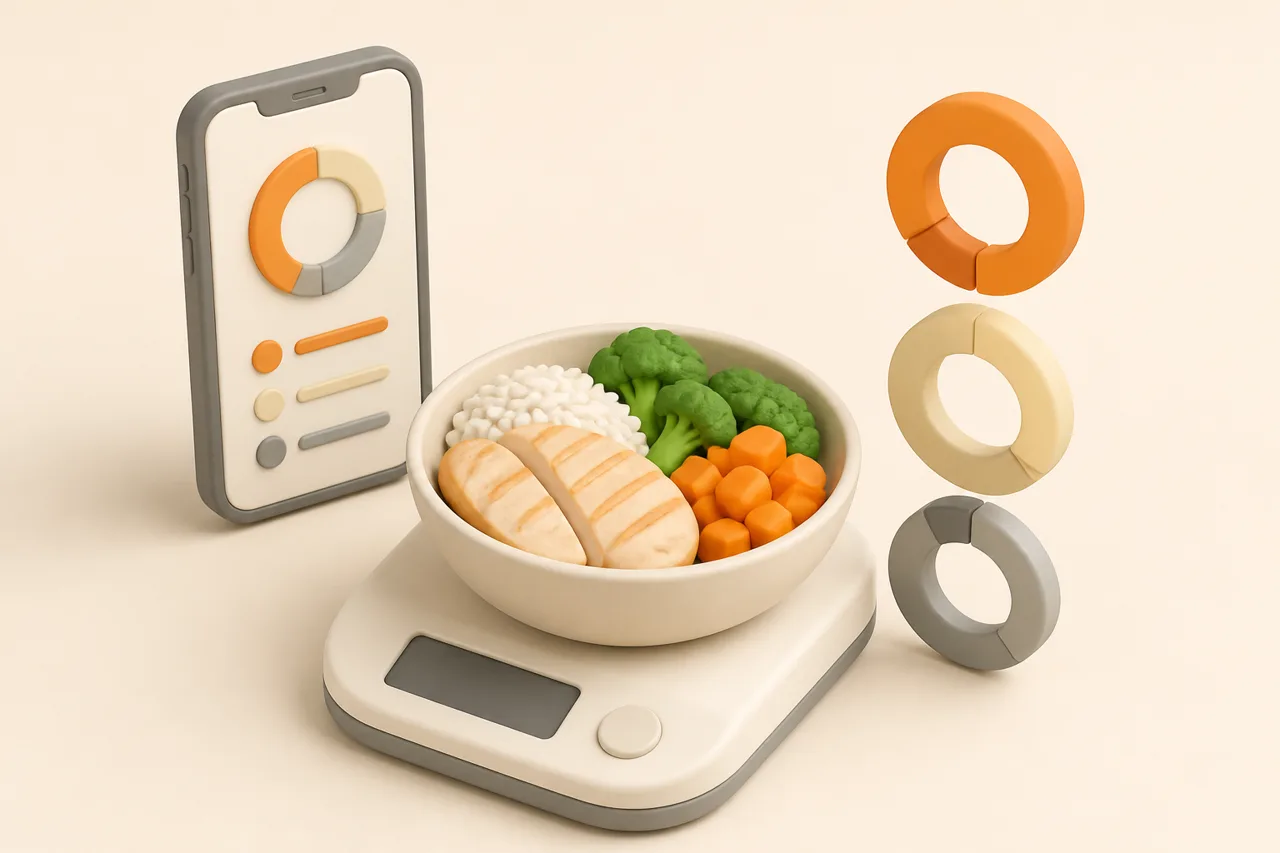
A dish you invented has no nutrition label. Sum the raw ingredients, weigh what comes out of the oven, and work in calories per gram instead of guessing portions.
You improvised a traybake on a Tuesday and now you want a number for it. There is no packet to read, the recipe exists only in your head, and dividing by 4 assumes everyone took an identical plate, which nobody ever does.
The method below takes about 6 minutes the first time you use it and gives you a figure you can reuse forever. Read it as general food information rather than dietary advice.
What does calculating calories in a recipe mean?
Calculating the calories in a recipe means adding the energy content of every raw ingredient you put in, then dividing that total by the weight of the finished food to get calories per gram. Cooking moves water around, but it does not create or destroy the energy you added.
That single idea does the heavy lifting. Once you know the per-gram figure, any portion becomes a weighing exercise rather than an estimate.
It also survives leftovers. The 240 g you take to work on Thursday gets the same treatment as the plate you ate on Tuesday.
Why is weighing the finished dish better than guessing portions?
Weighing the finished dish converts a vague fraction into a measured quantity, and portion error is the single biggest source of inaccuracy in home calorie estimates. Serving 4 people from one pan rarely produces 4 equal portions, and the difference between the biggest and smallest plate is routinely 30 percent.
There is a second reason. Water loss during roasting or simmering concentrates the food, so 200 g of finished stew carries more energy than 200 g of the raw mixture that went in.
Working per gram of finished food handles both problems at once. You stop estimating fractions and start reading a scale.
How do you calculate the calories step by step?
Run these 5 steps in order. Do them once per recipe and record the result on the recipe itself.
- 1Weigh every ingredient as you add it
Use grams and millilitres, raw, before cooking. Put the pan on the scale and tare between additions so you are not washing extra bowls.
- 2Look up energy per 100 g
Use a nutrition database or the packet on staples such as rice, oil and cheese. Note the figure next to each line so you never look it up twice.
- 3Sum the whole dish
Multiply each weight by its per-100 g value and add them up. Include the cooking oil, the butter in the pan and anything you drank while cooking is not part of it.
- 4Weigh the finished food
Tare the empty pot or dish first, or weigh it empty and subtract. Divide the total calories by the finished grams to get calories per gram.
- 5Weigh your plate
Multiply your serving weight by the per-gram figure. Save both numbers with the recipe so future portions take 10 seconds.
What does a worked example look like?
Here is a chicken and potato traybake, weighed on the way into the oven. The values per 100 g are typical approximations rather than exact figures for your specific brand.
| Ingredient | Raw weight | Approx. kcal per 100 g | Calories |
|---|---|---|---|
| Boneless chicken thighs | 600 g | 120 | 720 |
| Potatoes | 700 g | 77 | 539 |
| Red pepper | 200 g | 31 | 62 |
| Red onion | 150 g | 40 | 60 |
| Olive oil, 2 tbsp | 30 g | 884 | 265 |
| Salt, paprika, garlic | 10 g | negligible | 0 |
| Total in | 1,690 g raw | 1,646 kcal |
The tray comes out of the oven at 1,340 g, because roughly 350 g of water evaporated. Divide 1,646 by 1,340 and the dish is about 1.23 calories per gram.
A 350 g plate is therefore around 430 calories. An even quarter would have been 412, so the plate you actually served yourself is 4 percent higher than the assumption, and larger plates drift further.
Write 1.23 kcal per gram on the recipe and the work is done permanently. Tomorrow's 240 g lunchbox is 295 calories without touching a calculator app.
Which figures do you actually need to look up?
Memorise about 10 numbers and most home cooking becomes mental arithmetic. These are the ingredients that move a total meaningfully.
| Ingredient | Typical energy | Why it matters |
|---|---|---|
| Olive or vegetable oil | About 120 kcal per tablespoon | The most commonly under-recorded ingredient in home cooking |
| Butter | About 100 kcal per tablespoon | Adds up quickly in sauces and roasting |
| Dry rice or pasta | About 350 kcal per 100 g | Weigh dry, since cooked weight varies with absorption |
| Chicken breast, raw | About 105 kcal per 100 g | Thigh is roughly 120, skin-on higher again |
| Cheddar | About 400 kcal per 100 g | A grated handful is easily 40 g |
| Double cream | About 450 kcal per 100 ml | One of the few liquids denser in energy than sugar |
| Sugar and honey | About 400 and 300 kcal per 100 g | Useful for baking totals |
| Peanut butter | About 95 kcal per tablespoon | Spoon size varies wildly, so weigh it |
Weigh rather than measure by spoon wherever you can. Volume-to-weight conversions for the awkward ingredients are collected in convert recipe measurements.
Where does the error creep in?
Five things account for nearly all the inaccuracy, and only two of them are worth fixing. The rest you should acknowledge and move on from.
Worth fixing
These two are large, systematic and entirely within your control. Fix them and your estimate improves more than any amount of database hunting will manage.
- Oil you did not count. The glug in the pan is often 200 calories nobody logged. Measure it with a spoon.
- Portion estimates. The reason the whole method exists. Weigh the plate, not the fraction.
Worth knowing about
These three push in different directions and partly cancel each other out. Note them once, then stop adjusting for them.
- Oil left in the pan. Shallow-fried food absorbs some and leaves the rest behind, so your total overstates what you ate.
- Discarded parts. Marinade you poured away, bones, skin you removed, and fat drained off all leave calories in the bin.
- Database variation. Two entries for the same cut of meat can differ by 10 percent before you cook anything.
Water loss is the one people worry about unnecessarily. Evaporation changes the weight and therefore the density, which the per-gram method already handles, and it removes no energy at all.
How accurate does this need to be?
Aim for roughly 10 to 15 percent accuracy and stop there. Beyond that you are measuring database noise rather than food, and the extra effort is what makes people quit within a fortnight.
Consistency beats precision. A method that is 8 percent high every single time still shows you accurate week-to-week trends, which is what most people actually want from the number.
How does a recipe organiser fit alongside a nutrition tracker?
They do two different jobs, and the honest answer is that you need both if you want numbers. ReciBites is a recipe organiser: it has no nutrition database and does not calculate calories, so the arithmetic above stays with you or with a dedicated tracking app.
What it does contribute is the structured recipe those calculations depend on. ReciBites saves recipes from TikTok, Instagram, YouTube and any website, extracts them from screenshots and photos of cookbook pages, and keeps quantities as editable fields rather than a video you have to rewatch.
It also scales servings, which is where per-gram figures usually break. Doubling a recipe doubles the ingredients but not always the pan losses, so the guidance in scaling recipe servings is worth reading before you rely on a scaled total.
A practical split: keep recipes and the weekly plan in one app, keep the calorie log in another, and paste your per-gram figure into the recipe notes. The macro version of the same workflow is in tracking macros in recipes.
Some apps bundle nutrition estimates with recipe storage, which is a real difference worth weighing up in ReciBites versus Samsung Food and ReciBites versus BigOven.
If numbers are not the point for you, structure still is. The planning-first approach without any counting sits in meal planning for weight loss.
If you are weighing this against photographing the finished plate instead, photo calorie app accuracy sets out the 5 things a camera cannot see.
- Energy density
- Calories per gram of finished food. The figure this method produces, and the one that makes portions easy to calculate.
- Tare
- Zeroing a scale with the container on it, so you weigh only what you add next. The fastest way to log ingredients while cooking.
- Yield weight
- The weight of the dish after cooking, once water has evaporated. Divide total calories by this, not by the raw weight.
Frequently asked questions
+How do I calculate the calories in a recipe I made up?
Add the calories of every raw ingredient including oil, weigh the finished dish, then divide total calories by total grams. Multiply that per-gram figure by your portion weight.
+Should I weigh food raw or cooked?
Weigh ingredients raw for the calorie total, then weigh the finished dish to get calories per gram. Mixing raw values with cooked weights is the most common mistake.
+Does cooking change the calories in food?
Not meaningfully. Evaporation removes water, which raises calories per gram without changing the total. Only fat that drains away or stays in the pan actually leaves the dish.
+How accurate is calculating calories at home?
Roughly 10 to 15 percent, mostly from uncounted oil, database variation and discarded fat. That is accurate enough to track trends over weeks.
+How do I count calories in a recipe with oil?
Measure the oil with a spoon rather than pouring by eye, and count about 120 calories per tablespoon. For shallow frying, some stays in the pan, so the total is slightly high.
+Can a recipe app calculate calories for me?
Some apps include nutrition estimates. ReciBites does not, since it has no nutrition database, so pair it with a dedicated tracker if you want automatic numbers.
+How do I split calories between unequal portions?
Work in calories per gram of finished food, then weigh each plate. Dividing by the number of eaters assumes equal servings, which is rarely true.
+Do I need to count spices and herbs?
No. Salt, dried spices and fresh herbs contribute a negligible amount at normal quantities. Count the oil, fat, sugar and starch instead.
- #calories
- #nutrition
- #portions
- #tracking