

Special Diets and Fitness
How to meal plan for weight loss without tracking every bite
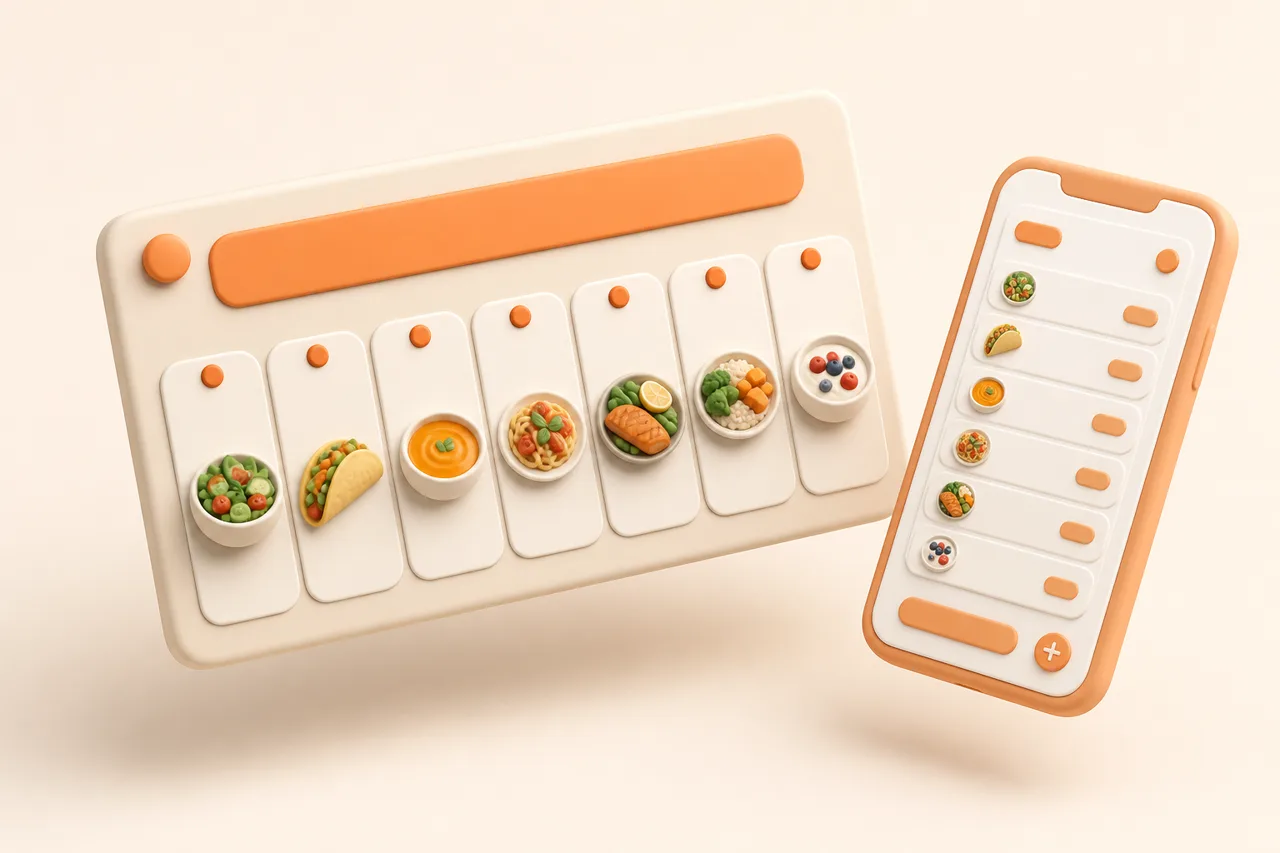
Most weight-loss plans fail on structure, not willpower. Build portions and a weekly rhythm you would keep anyway, and the counting becomes optional.
Almost everyone who has tried to lose weight has built a perfect 7-day plan on a Sunday and abandoned it by the following Thursday. The plan was not wrong about food. It was wrong about the week you were actually going to have.
This guide takes a structural approach instead: a repeatable portion pattern, a planning routine that starts from meals you already eat, and a rule for the nights that do not go to plan. Read it as general food information rather than medical or dietary advice.
What is meal planning for weight loss?
Meal planning for weight loss is deciding in advance what you will eat and in what portion, so that a modest daily energy deficit happens by default rather than by decision. The plan does the restraining, which means you are not relying on willpower at 7pm on a Wednesday.
That is a different job from tracking. Tracking measures what already happened; planning changes what is available to happen, and only one of those works while you are tired and hungry.
You can do both, and plenty of people track for a fortnight to calibrate their eye and then stop. The plan is the part worth keeping.
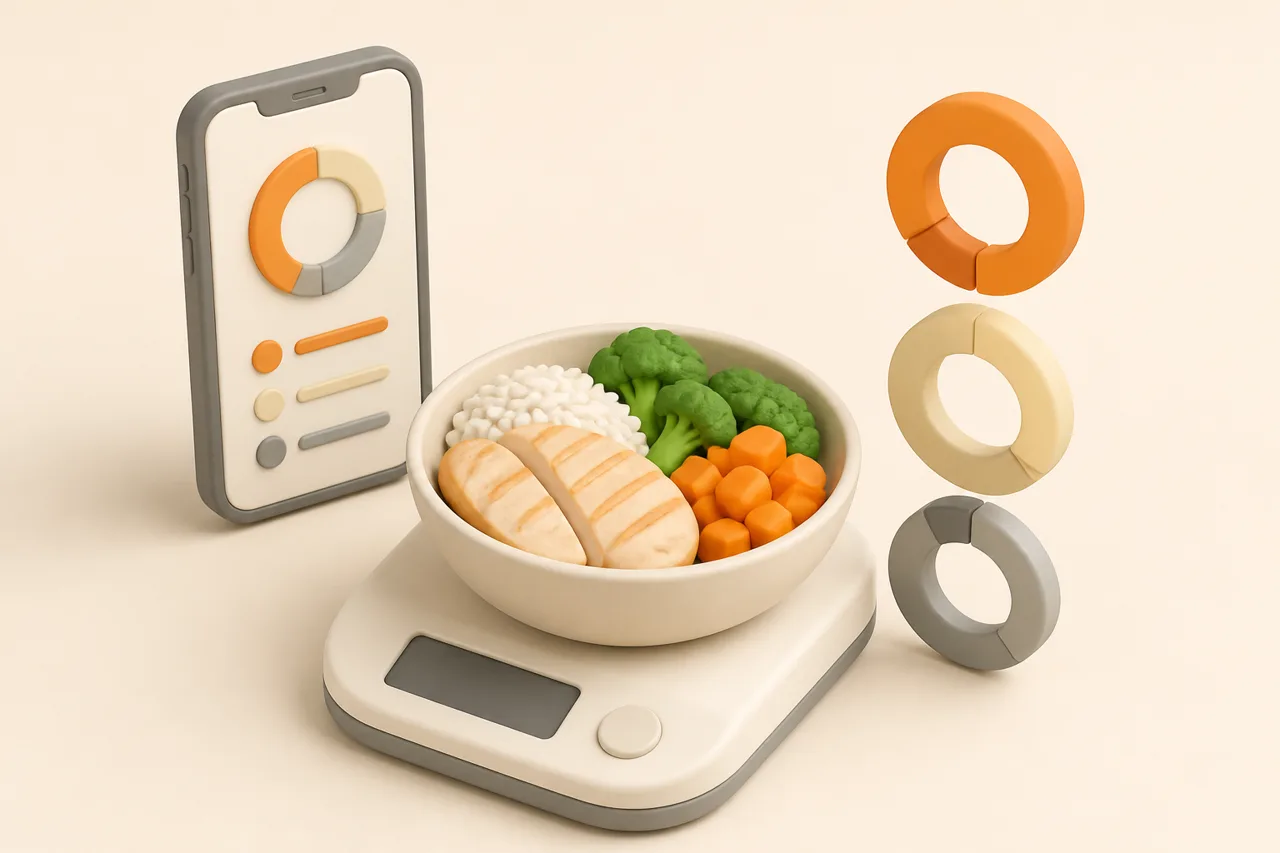
If you want that calibration period, run it deliberately and give it an end date. Two weeks of honest logging teaches you what 30 g of cheese looks like, and the method for pulling numbers out of your own cooking sits in tracking macros in recipes.
Why do restrictive plans fail in week 3?
Restrictive plans fail in week 3 because their two engines run out at the same time: novelty and slack. Week 1 is interesting, week 2 is manageable, and week 3 is when a late meeting, a birthday and a dull lunch all land in the same 7 days.
The plans that survive share a shape. They use food you already cook, they repeat, and they leave room for the meals you did not schedule.
| Plan trait | Fails by week 3 | Survives past month 3 |
|---|---|---|
| Recipe source | 20 new recipes you have never cooked | 8 dishes you already make well, on rotation |
| Variety | A different meal every day, 21 a week | Repeated breakfasts and lunches, varied dinners |
| Prep load | Two hours of cooking on a weeknight | One batch session, plus 20-minute assemblies |
| Rules | No bread, no sugar, no eating out | Portion structure with 2 flex meals booked in |
| Failure handling | One takeaway ends the plan | One takeaway is already in the plan |
What is portion architecture?
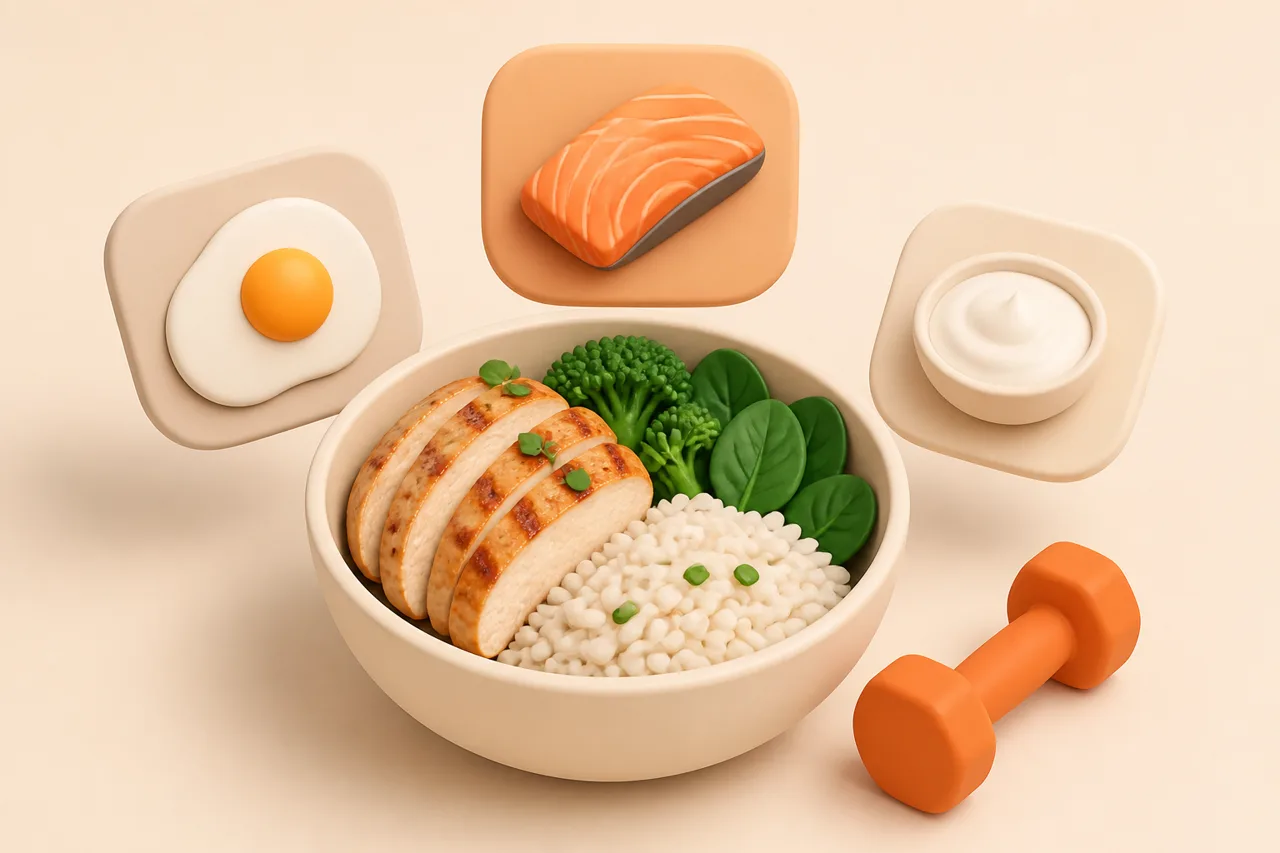
Portion architecture is a fixed structure you apply to every plate, so portion size becomes a pattern instead of a nightly judgement call. Three components, in the same order, every meal.
1. The protein anchor
Start with a palm-sized portion of protein, roughly 100 to 150 g cooked for most adults, and build the rest of the plate around it. Protein is the most satiating macronutrient per calorie, which is why the meals that leave you rummaging at 9pm are usually the ones that skipped it.
2. The volume layer
Fill roughly half the plate with vegetables, salad or broth-based soup, because water and fibre create fullness at low energy density. A 300 g serving of roasted vegetables and a 60 g handful of crisps can carry similar calories, and only one of them ends the meal.
3. Controlled fat and a measured starch
Fat is where portions drift fastest, since a tablespoon of olive oil is about 120 calories and nobody pours a tablespoon. Measure cooking oil with a spoon rather than the bottle, and serve starch as a defined portion, for example a fist of rice, rather than from a communal bowl on the table.
That is the entire framework. Apply it to a curry, a burrito bowl or a roast dinner and the numbers land in a sensible range without a single entry in an app. The protein side of it is expanded in high-protein meal prep.
How do you plan the meals you would eat anyway?
Start from your own history rather than a blank week. Write down the 10 dinners you actually cooked in the last month, then adjust those, because a plan built on food you like needs no motivation to follow.
- 1List your real rotation. The 8 to 10 meals you cook without thinking. That is your menu.
- 2Rebuild each one to the plate structure. Usually this means more vegetables and a measured oil, not a new recipe.
- 3Repeat breakfast and lunch. Two breakfasts and three lunches on rotation removes 10 decisions a week.
- 4Assign dinners to days by effort. The 40-minute recipe goes where you have 40 minutes, not where it looks good on paper.
- 5Book 2 flex meals before the week starts, so the unplanned meal is a scheduled one.
Batch one component rather than whole meals, and reheat quality stops being a problem. Cook the protein and a grain on Sunday, then finish them three different ways, using the approach in batch cooking for the week.
Then write the plan down where you will see it. A plan that lives in your head is a set of intentions, and it competes badly with whatever is quickest at 6pm on a Tuesday.
What is the flex-meal rule?
The flex-meal rule reserves 2 meals a week that are not planned, not measured and not compensated for afterwards. You decide the number in advance; you do not decide the food.
It works because it removes the all-or-nothing trigger. A dinner out stops being a failure that ends the plan and becomes one of the two slots you already allocated.
Place the slots where your week already bends. Friday dinner and Sunday lunch cover most social eating, and pinning them means the other 12 meals need no negotiation at all.
Where does progress quietly leak away?
Most stalled plans leak in 5 predictable places, and none of them is dinner. Dinner is the meal people plan; the leaks happen around it.
- Cooking oil poured by eye. Three unmeasured glugs across a day is a meaningful amount of energy.
- Finishing the children's plates. Standing at the counter counts, even though it never feels like a meal.
- Liquid calories. Juice, lattes and alcohol arrive without any of the fullness that food brings.
- Leftovers eaten as a second dinner because the container was there and the portion was awkward.
- Weekend drift. Two loose days out of 7 can cancel a careful 5, which is where a planned flex meal helps.
None of these require a tracking app to fix. They require noticing, which is easier once your weekday meals are on a plan and the exceptions stand out.
Pick one leak a fortnight rather than all 5 at once. Measuring cooking oil alone changes a household's weekly intake more than any recipe swap, and it costs you one teaspoon of extra washing up.
How does a recipe organiser fit into this?
A recipe organiser removes the admin that makes people stop planning. ReciBites saves recipes from TikTok, Instagram, YouTube and any website, generates a weekly meal plan, and turns that plan into a grocery list with duplicates merged and items grouped by aisle.
That matters because the shop is where plans usually break. Buying to a list built from your planned meals is what makes Wednesday's dinner possible; browsing the aisles is what makes it a takeaway.
Be clear about the limits. ReciBites has no nutrition database and does not calculate calories, so if you want numbers you either estimate them yourself with the method in calculate calories in a recipe or run a dedicated tracker alongside it.
Planning apps take different positions on this. Some lead with nutrition data and some lead with the weekly routine, which is the practical split in ReciBites versus Mealime and ReciBites versus Plan to Eat.
If you also want intake recorded rather than only planned, ReciBites vs MyFitnessPal covers why logging and planning are different jobs.
- Energy density
- Calories per gram of food. Low-density foods such as vegetables and soup fill the stomach for fewer calories.
- Satiety
- How long a meal keeps you full. Protein, fibre and food volume raise it; refined carbohydrate and liquid calories rarely do.
- Flex meal
- A meal deliberately left unplanned in the week, so that eating out or ordering in is part of the plan rather than a break from it.
Frequently asked questions
+Can I lose weight without counting calories?
Many people do, by fixing portion structure instead: a palm of protein, half a plate of vegetables and measured cooking oil. Counting is one tool for awareness, not a requirement.
+How do I meal plan for weight loss as a beginner?
List the 8 to 10 meals you already cook, rebuild each to the plate structure, repeat breakfasts and lunches, and book 2 flex meals. Shop once from the resulting list.
+Why do I always quit my meal plan after 2 weeks?
Usually the plan needed too many new recipes and left no room for unplanned meals. Plans built on food you already cook, with flex meals scheduled, survive a busy week.
+How much protein should be on my plate?
A palm-sized portion, roughly 100 to 150 g cooked, suits most adults per meal. Needs vary with body size and activity, so check with a professional for a personal target.
+Does meal prepping actually help with weight loss?
It helps by removing the decision at the moment you are hungriest. Prepping components rather than full meals keeps food appealing enough that you eat what you prepared.
+Should I weigh my food?
Weighing for a week or two calibrates your eye, especially for oil, nuts, rice and cheese. Most people then estimate accurately enough without weighing everything permanently.
+How many calories should I eat to lose weight?
That depends on your body, activity and health history, so a doctor or registered dietitian should set it. This article covers structure rather than personal numbers.
+What is a flex meal in a weight-loss plan?
A meal you deliberately leave unplanned, usually 2 a week. It absorbs dinners out and takeaways so one unscheduled meal does not derail the whole week.
- #weight loss
- #meal planning
- #portions
- #habits