

Meal Planning and Groceries
Do you need one app for recipes, meal plans and grocery lists?

A notes app, a planner, a list app and a screenshot folder. Every gap between them is manual work, and the work is always retyping the same ingredients.
Look at how a week of cooking is actually assembled. Recipes live in a saved folder on one app and a screenshot album on another. The plan is a note or nothing at all. The shopping list is typed from scratch on Saturday morning.
None of those tools is bad. The cost is in the spaces between them, and the cost is always the same thing: reading ingredients out of one place and typing them into another. This article works out when consolidating is worth it and when it is not.
What are the 5 steps in a cooking week?
Every week you cook from, however informal, contains the same 5 steps. Naming them makes it obvious where the friction sits.
- 1Capture. A recipe arrives, usually as a video, a link or a photograph, and you keep it somehow.
- 2Plan. You decide which of those recipes happen on which nights.
- 3Shop. The planned recipes turn into one list of things to buy.
- 4Use the pantry. Midweek, something needs eating and the plan bends around it.
- 5Filter for diet. Someone cannot eat an ingredient, so a recipe changes or gets dropped.
Step 3 is the one people notice, because it is visibly tedious. Step 1 is the one that quietly decides everything, since a recipe captured as a video with no ingredient list cannot be planned or shopped for at all.
What breaks at each handoff?
A handoff is any point where you move information between apps by reading and retyping. Each one is small; the total is why Sunday takes an hour.
| Handoff | Manual work | What goes wrong |
|---|---|---|
| Saved video to a plan | Rewatch, pause, write it out | You skip it and cook something familiar |
| Plan to shopping list | Read 5 recipes, type every line | Duplicates get bought twice |
| List to the shop | Reorder it mentally by aisle | Two laps of the supermarket |
| Fridge to plan | Remember what is in there | Half a cabbage becomes waste |
| Diet to recipe | Scan every ingredient yourself | A restriction gets missed |
The duplicate row is the clearest example of something software should never have left to a person. Three recipes calling for onions should be one line with a total, which is the whole argument in grocery lists from recipes.
What does a combined workflow remove?
The gain is not features, it is deleted steps. If the recipe is structured at capture, every later step can read it without a person in between.
- The video gets read once, into ingredients and a method, rather than rewatched each time.
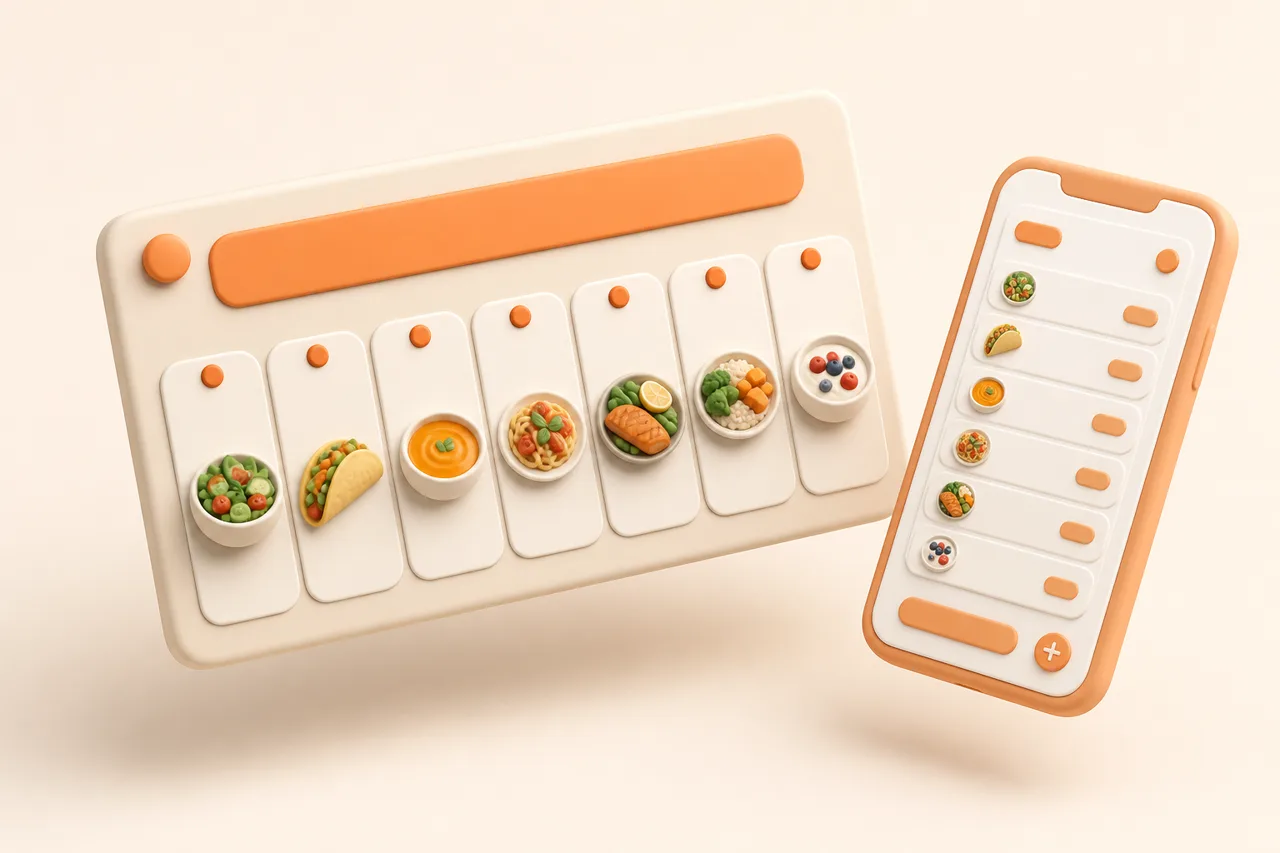
- The plan draws from that library, so nothing has to be re-entered to be scheduled.
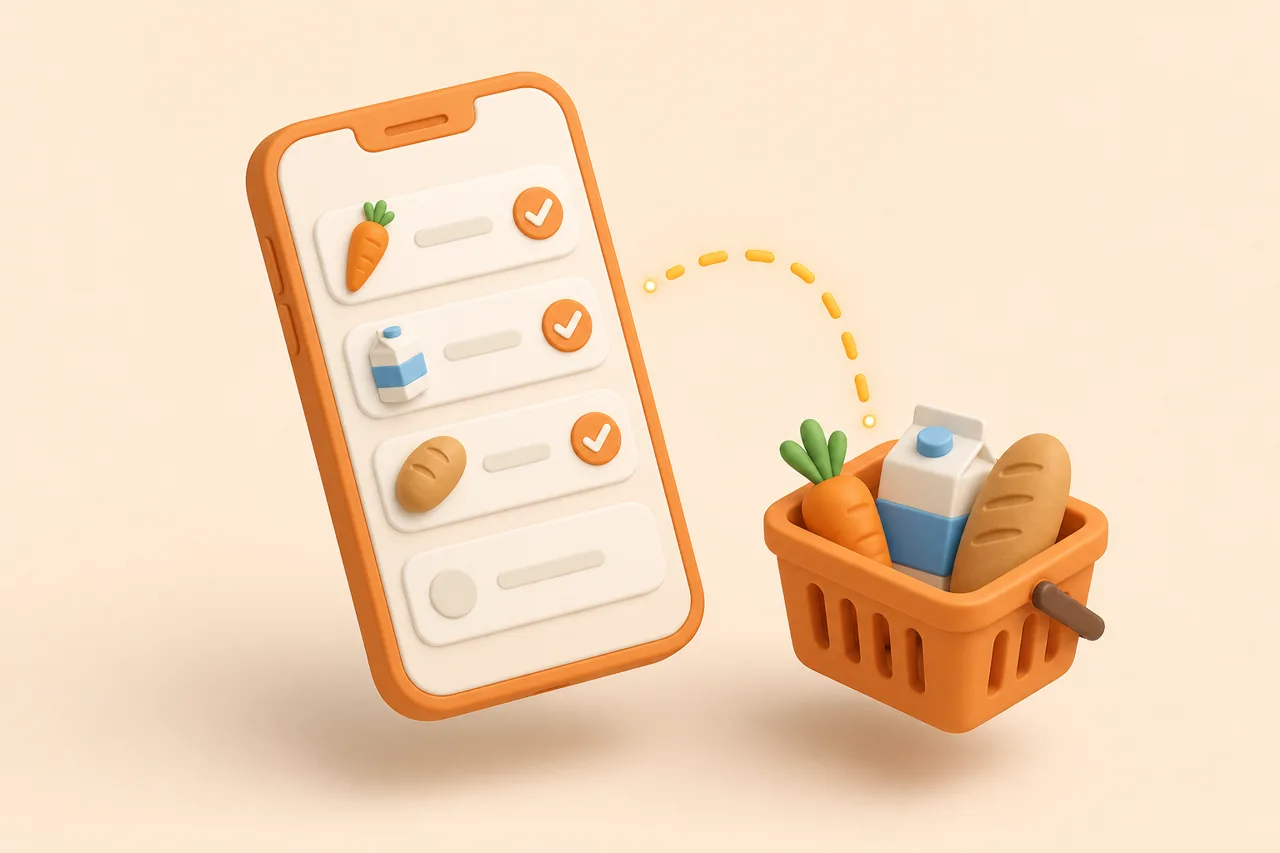
- The list is generated from the plan, with duplicates merged and items grouped by aisle.
- Fridge suggestions come from the same library, so a midweek swap is a choice rather than a rescue.
- Dietary rules are applied to the recipe itself, flagging the ingredient and offering a swap.
Note what is not on that list: better recipes. Consolidation does not improve your cooking. It removes about 40 minutes of clerical work a week and makes it more likely that the recipe you meant to cook actually gets cooked.
When are separate apps better?
Often enough that this deserves saying plainly rather than at the end in small print. Three cases favour keeping things apart.
A shared household list is the strongest. If 3 people add to a list all week and someone else does the shop, a dedicated shared list app usually handles that better than a list generated from a plan, which is why share a grocery list treats it as its own problem.
Desktop planning is the second. If you plan on a laptop with 2 windows open, a mobile-only workflow fits badly. The third is a strong existing habit: a system you have used for 5 years and never think about is worth more than a better one you have to learn.
Why does capture decide everything downstream?
Because the later steps operate on data, and only capture produces it. A recipe stored as a link is a pointer; a recipe stored as ingredients is something software can add up, halve, search and check.
Follow one recipe through both versions. Saved as a video, it can be watched. It cannot be scaled from 4 servings to 2, cannot contribute its onions to a merged list, cannot be checked against a gluten-free rule, and cannot be matched against what the fridge holds. Every one of those failures is the same failure: there is no ingredient list, only a film of somebody making one.
Imported into structured ingredients, all 4 become possible at once, which is why what is a recipe importer treats the import step as the foundation rather than a convenience. It is also why fixing the shopping list first is the wrong order: you can make the list step slicker while the recipes stay unreachable, and the week still collapses at the point where you cannot remember what you saved.
The same logic applies to dietary needs. An app can only flag an ingredient it can read, so dietary filtering depends on the capture step having produced a real ingredient list rather than a caption.
How do you decide?
Count handoffs for one week. Write down every point where you read something in one place and typed it in another.
| Handoffs per week | What it means | Worth changing? |
|---|---|---|
| 0 to 1 | Your system works | No |
| 2 | Mild friction, usually the shopping list | Only if that step annoys you |
| 3 to 4 | This is why planning takes an hour | Yes |
| 5 or more | The plan probably collapses most weeks | Yes, start with capture |
One more consideration decides this for a lot of households: who else is involved. A single cook can hold a loose system together by memory. Two adults cooking on alternate nights cannot, because the plan has to be legible to somebody who did not make it, and a shopping list has to make sense to whoever passes the shop first. That is the point at which handoffs stop being a personal inefficiency and start causing the same ingredient to be bought twice in a week.
For the planning step on its own, meal plan for a week is the manual routine, and a pantry recipe generator covers the midweek step that keeps a plan flexible.
On tools, ReciBites vs Plan to Eat covers a planning-first app, ReciBites vs AnyList covers a list-first one, and ReciBites vs Paprika covers a library-first one.
- Handoff
- Any point where information moves between apps by a person reading it in one and typing it into another.
- Capture
- Turning a recipe from a video, link or photo into structured ingredients and steps, which every later step depends on.
- Ingredient merging
- Combining the same ingredient across several planned recipes into one grocery line with a summed quantity.
Frequently asked questions
+Do I need one app for recipes, plans and groceries?
Only if you are retyping ingredients between apps. Count the handoffs in a week: 3 or more is why planning takes an hour, and consolidation removes them.
+What are the 5 steps in a cooking week?
Capture a recipe, plan which nights it happens, shop for it, cook around what the pantry holds, and filter recipes for dietary needs.
+Which step should I fix first?
Capture. If recipes stay trapped in saved videos with no ingredient list, they cannot be planned or shopped for no matter how good your list app is.
+When are separate apps better?
For a shared household list, for planning on a desktop, and when you already have a habit that works. A system you never think about beats a better one you must learn.
+How much time does consolidating save?
Roughly 40 minutes a week of clerical work: rewatching videos, retyping ingredients and reordering the list into shop order.
+Does one app mean worse features?
It can. The trade is fewer handoffs against depth in any single step, which is why shared lists and desktop planning still favour dedicated tools.
+Why do duplicates matter on a shopping list?
Three recipes calling for onions should produce one line with a total. Repeated lines mean buying twice and doing arithmetic in the aisle.
+Can dietary rules be applied automatically?
Yes, if the recipe is structured. ReciBites flags ingredients that break a rule you set and suggests swaps that behave the same way in the dish.
- #meal planning
- #grocery list
- #organisation
- #workflow