

Special Diets and Fitness
Recipe app vs calorie tracker: which one do you actually need?
One works before the meal and one works after it. Picking the wrong one means measuring a problem instead of fixing it.
These 2 categories get compared constantly and they do not overlap. A tracker answers what did I eat. A recipe app answers what am I cooking and what do I need to buy. Both are about food and they sit on opposite sides of the meal.
Choosing wrongly has a specific cost: you end up measuring a problem in great detail without changing anything about it. This article works out which half of your week is actually broken.
What does each type of app do?
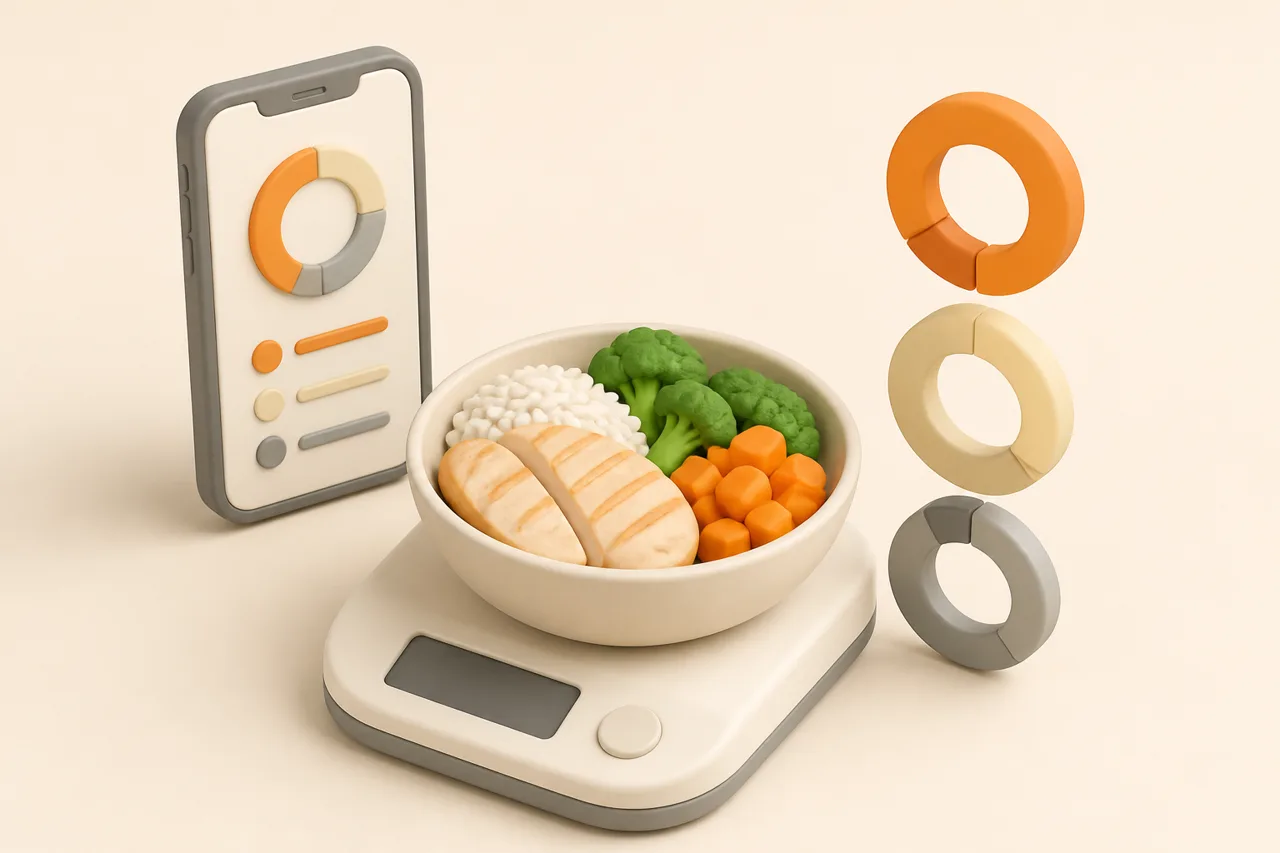
A calorie tracker takes food you have already eaten and totals its energy and macronutrients against a daily goal. Input comes from a database search, a barcode, a photo or a recipe you entered, and the output is a number and a trend.
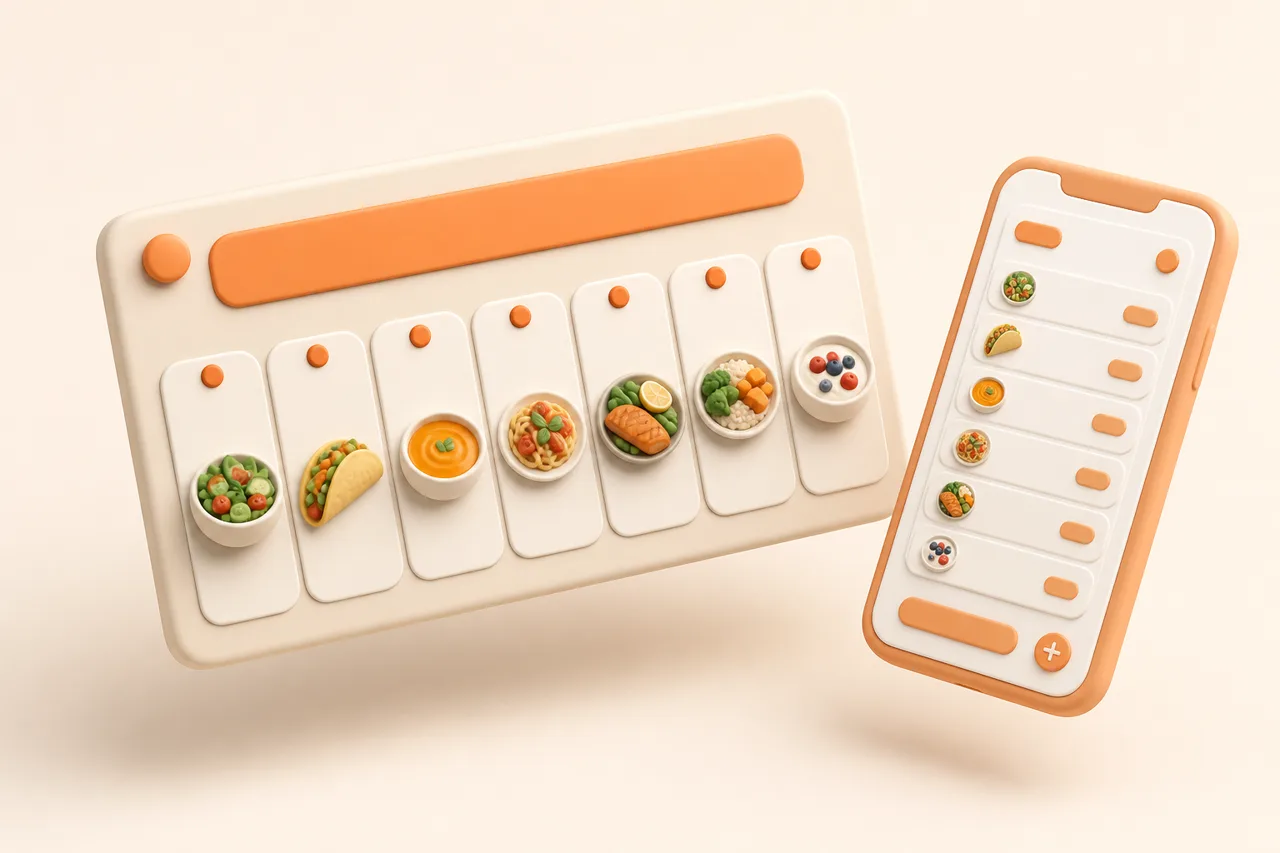
A recipe app takes recipes you want to cook and organises everything upstream of eating. It stores the recipes, schedules them across the week, produces the shopping list, and checks them against dietary rules. The output is a plan and a list.
Stated that way the division is obvious, and it explains why people who own both still complain about dinner. Owning a tracker does nothing about an empty fridge at 7pm.
How do you tell which one you need?
Answer 5 questions honestly. The answers point at one column, and it is usually clear which.
| Question | If yes | Because |
|---|---|---|
| Do you know what you are cooking on Thursday? | Tracker | Planning is already handled |
| Do you shop from a written list once a week? | Tracker | The logistics work |
| Do you eat mostly food you did not cook? | Tracker | There is no recipe to plan |
| Do you decide dinner after 6pm most nights? | Recipe app | That is a planning failure |
| Do you have saved recipes you never cook? | Recipe app | Retrieval is the problem |
The saved-recipes question is the most diagnostic. If you have 200 recipes in a folder and cook the same 5 dishes, no amount of logging touches that gap, and why saved recipes get lost explains why it happens.
Which gives more accurate numbers?
Counterintuitively, the recipe. A recipe is a measurement made before cooking, while a log entry is usually an estimate made afterwards.
Cook a curry for 4 from a recipe and you know it contained 600 g of chicken, 400 ml of coconut milk and 2 tablespoons of oil, so a quarter of the pan is defensible arithmetic. Estimate the same plate afterwards and the oil is invisible, the coconut milk is guesswork and the portion depth is a guess from a flat image.
- Cooking oil is the biggest systematic omission: 1 tablespoon is roughly 120 calories.
- Sauces and dressings hide fat and sugar behind a colour.
- Restaurant portions are the case where a database genuinely beats a recipe, since you did not control anything.
- Packaged food is the other: a barcode is exact and a recipe does not exist.
So the accurate approach is to take numbers from recipes for food you cook and from a database for food you did not, which calculate calories in a recipe sets out in method.
What about dietary restrictions?
This is where the categories stop being comparable at all. A restriction is not a number, and a tracker has no way to express it.
A tracker can tell you a meal contained 12 g of saturated fat. It cannot tell you the recipe contains gelatine, that the Thai curry paste contains shrimp, or that the vanilla extract contains alcohol. Nor can it offer a replacement, because replacement is a cooking decision rather than an accounting one.
A recipe app can read an ingredient list against rules you set, flag the offending line and propose a swap that behaves the same way in the dish. For halal, vegan, gluten-free and allergy cooking that is the entire job, and dietary filtering covers how the flagging works.
Why can one app not do both well?
Because the 2 jobs want opposite things from the same data, and this is worth understanding rather than treating as a gap somebody will close.
A tracker needs every food to be a fixed database row, since the entire purpose is totalling numbers. A planner needs a recipe to be editable: 6 servings scaled to 4, butter swapped for oil, an ingredient dropped because somebody cannot eat it. The moment you rewrite a recipe, the logged numbers are wrong, and the moment you freeze the numbers, the recipe stops being adaptable.
That tension explains what you see in the market. Trackers add planning on top of a logging engine and it feels bolted on. Recipe apps mostly decline to keep a diary. Choosing the app whose core job matches your problem beats choosing the one with the longer feature list, which is the same conclusion choose a recipe manager reaches from the other direction.
| Requirement | Tracking needs | Planning needs |
|---|---|---|
| Ingredient data | Fixed, from a database | Editable and scalable |
| Time direction | Backwards, what happened | Forwards, what will happen |
| Unit of interest | A day, and a total | A week, and a list |
| Handles a swap | Invalidates the numbers | The normal case |
| Handles a restaurant meal | Well, from the database | Not at all |
How do you run both without duplicating work?
Give each app one job and never let them overlap. The division below takes about 20 minutes a week of planning and a few seconds per meal of logging.
- 1Plan 4 dinners from your saved recipes at the weekend, leaving 2 nights open.
- 2Generate one shopping list from that plan and do a single shop.
- 3Log meals in the tracker as you eat them, including the ones you did not cook.
- 4Review the week in the tracker and change next week's plan, not this week's log.
That last step is the one that makes tracking worth doing. A log you never act on is a diary; a log that edits next week's plan is a feedback loop. Meal plan for weight loss covers the planning side of that loop.
One caution about running both: do not let the tracker start deciding meals. It is tempting, because a diary showing a protein shortfall invites you to fix tonight rather than next week. Reacting nightly turns eating into a series of corrections, which is exhausting and rarely lasts a month. The plan is the instrument of change; the log is only the reading.
If you are leaning towards photo-based logging, how accurate are photo calorie apps covers what a camera can and cannot see, and apps for athletes who cook covers the same decision with training in the mix.
For specific comparisons, ReciBites vs MyFitnessPal covers database logging, ReciBites vs Cal AI covers photo estimation, and ReciBites vs Lifesum covers tracking bundled with diet plans.
- Retrospective tracking
- Recording food after eating it. Useful for measuring a trend, and it cannot change the meal that already happened.
- Prospective planning
- Deciding meals before the week starts, so the correction happens before the food is bought.
- Macronutrients
- Protein, carbohydrate and fat. Trackers total them per day; recipes let you calculate them per serving in advance.
Frequently asked questions
+Should I use a recipe app or a calorie tracker?
A tracker if you already know what you are cooking and shop from a list. A recipe app if dinner gets decided after 6pm or saved recipes never get made.
+Can one app do both jobs?
Rarely well. Tracking needs fixed database entries; planning needs editable recipes that scale and swap. Apps attempting both usually do one properly.
+Which gives more accurate calorie numbers?
A recipe, for food you cooked, because the quantities were decided in advance. A database or barcode is better for restaurant and packaged food.
+Do calorie trackers handle allergies?
No. They report nutrients rather than flagging that a recipe contains gelatine or fish sauce, and they cannot suggest a replacement ingredient.
+Is tracking useful if I do not plan?
Less than it looks. A log tells you the week went badly after it already has. Planning moves the correction to before the shop.
+How do I use both apps together?
Plan and shop in the recipe app at the weekend, log meals in the tracker as you eat them, then let the log change next week's plan.
+Which is better for weight loss?
Whichever addresses your failure point. Measurement helps if the process works; if the fridge is empty at 7pm, planning is the intervention.
+Do recipe apps show nutrition per serving?
Many do, calculated from the ingredients and the yield. That is more reliable than estimating a plate, though it assumes the import read quantities correctly.
- #nutrition
- #meal planning
- #tracking
- #app comparison